Farms.com Home   Ag Industry News

The Ford 1310: a handy tractor for many small chores

While these tractors were distributed by Ford, they were actually manufactured in Japan

IN THE SHOP with Rachel

By Rachel Gingell
Farms.com

The Ford 1310 was a big upgrade in the evolution of modern compact tractors — and it’s still in use on some farms today!

Around 4,000 of these tractors were built from 1983 until 1986. The compact 20 hp tractor came with live hydraulics and an optional live PTO. A four-wheel drive model was also offered, along with a front PTO. (That last option, however, is especially difficult to find).

While these tractors were distributed by Ford, they were actually manufactured in Japan by Shibaura. Instead of purchasing an engine from a different company, Shibaura designed and produced their own engines for the 1310 (and other tractors in the 10 series). The Shibaura 1.0 L, three cylinder diesel engine was an upgrade from the two cylinder engine used in the previous model (Ford 1300).
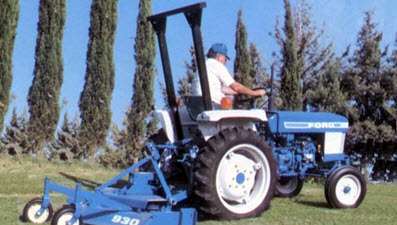

Ford 1310
Photo: TractorData.com

Shibaura’s designs were basically solid and the company was well-respected for its work. (Shibaura also produced Perkins engines, Yanmar tractors and STIHL power tools.) Over the years, the company manufactured more than 2.5 million diesel engines!

In recent years, it’s become harder to get parts for these tractors. New and aftermarket stock can be difficult to find. In particular, rings and pinions are in high demand for these tractors. Unless you have a good source of parts, be wary of purchasing a high-hour tractor that is coming due for an engine rebuild.

These tractors came with an array of attachments, including a loader, snow blower, belly mower and backhoe. These tractors are ideal for small projects around the yard.

All the features of the 1310 that make it popular for chores in the yard also made it a hot ticket for landscaping companies. It’s small, lightweight design is particularly easy to haul from one jobsite to another. However, tractors owned by landscaping companies are often put through the wringer!

If you’re looking at purchasing a 1310, ask about the tractor’s history. Carefully inspect the three-point hitch, paying particular attention to the bolts that attach the hitch to the axle housing. It’s the first area to show signs of abuse - if the tractor’s attachments have been jerked back and forth repeatedly, this area will be damaged.

These tractors are very efficient on fuel and have super-fast hydraulics. They are a lot of fun to use for small jobs around the yard. If you find one in good condition, you’re in for a real treat! 


Trending Video

Western Canadian Agriculture: Hard Times Made the World's Best Farmers

Video: Western Canadian Agriculture: Hard Times Made the World's Best Farmers

Western Canadian agriculture produced the most advanced farmers in the world not through abundance but through adversity. The crow rate fell. The wheat price went nowhere. The brown envelopes stopped.

When the subsidies disappeared, the bad farmers left and the good ones stayed. And the ones who stayed could not just grow wheat anymore. They started growing lentils and canola and peas and flax and faba beans. They built crop rotation. They got serious about agronomy because there was no government backstop. That process produced the Western Canadian agriculture Dennis Bulani describes in this clip: the most advanced, most educated farming culture in the world.

His contrast with Iowa corn and soybean farmers is sharp. At a DeKalb farmer meeting in Okoboji, Iowa, he asked what crop rotation they ran. Beans on corn stubble, corn on bean stubble. How do you fertilize? The co-op agronomist handles it. Have you considered other crops? No need. We make so much money on corn and soybeans. Western Canadian agriculture was never allowed that comfort. And now those Iowa farmers are watching soybean markets lock up with China and corn prices slide, and they do not have the agronomy knowledge or the research base to pivot. Western Canadian farmers adapted on a dime because they had done it before.

Dennis also makes the case that Western Canadian agriculture keeps adapting in real time. Low commodity prices over the past year have pushed growers to look seriously at precision spot-spray technology. He knows a neighbor who bought a sprayer with the seeing-eye system and sprayed only 80 out of 320 acres. As a chemical retailer Dennis acknowledges that will affect his sales. He supports it anyway, because if it advances Canadian agriculture and makes farmers money, that is a good outcome.

The lesson Dennis draws from the tale of two farms: continuous improvement is the only durable strategy. When canola was $22 a bushel some growers went to Arizona instead of the Crop Production Show. When the price came down those same growers came back to the research and the discipline. Products do not go on Rack Petroleum's shelves unless they pass a replicated trial first. That is what Western Canadian agriculture built through hard times: farmers who do the work whether the times demand it or not.

Dennis Bulani is CEO of Rack Petroleum and Ultimate Yield in Biggar, Saskatchewan. Dan Aberhart hosts GTF Productions, Western Canadian Agriculture's foremost live briefing platform and its foremost AI training platform for ag operators