On March 27, 2018, the Ontario Hazelnut Association, in co-operation with Ferrero Canada, will host IF YOU PLANT IT, THEY WILL COME, the 9TH Annual Ontario Hazelnut Association Symposium. a gathering of growers, nurseries, companies, government, academics and executives who are involved in the hazelnut value chain in Ontario.
PROGRAM OVERVIEW
The program will include plenary sessions and panel sessions delivered by Canadian and international experts with key guest speakers and thought-provoking panel discussions focusing on communication, market development, investment and commercialization, resource support and domestic and international collaboration, from the discovery side to launching into the market and beyond. This will provide a great opportunity to network and interact with true scientists and innovators.
Topics include:
• Keynote Speaker– Margaret May, OSCIA, Grower Funding Opportunities under the Canadian Agricultural Program
• AAFC – Financial Programs
• Grower Panel – Hazelnut Intercropping
• University of Guelph – Latest Research & Variety Updates
• OMAFRA – Food Safety and Cost of Production
• Ferrero – Greetings & Latest Agronomic Updates
This symposium is being produced to assist Ontario producers and innovators to develop the Ontario Hazelnut market become a vibrant and leading-edge diversification opportunity. It is for growers, nurseries, aggregators, food and other product developers in this space become more successful.
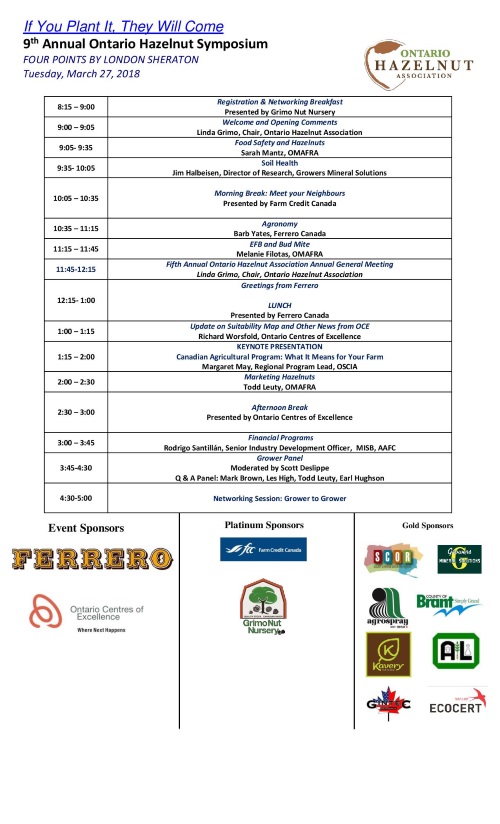
Source : Ontario Hazelnut Association