For Alabama peach farmers, this time of year is crucial in determining how the growing season will turn out.
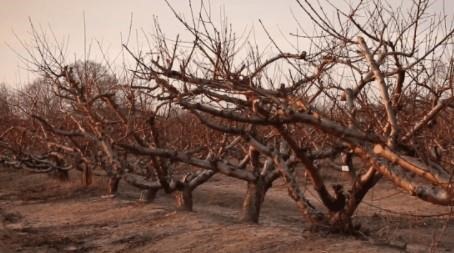
In order to resume adequate growth in the spring, peach trees require a certain amount of exposure to cool temperatures after the tree goes dormant. Chilling is the amount of cool weather it takes for a plant to come out of winter with normal growth in the spring.
“It should be a good season in terms of chilling,” said Edgar Vinson, an Alabama Cooperative Extension System commercial horticulture assistant professor.
After the leaves fall and cold weather rushes in, the growth regulators that inhibit plant growth start to rise. Simultaneously, growth regulators that promote growth start to decline, halting all visible signs of growth and development. As the peach crop meets the required amount of chilling the plant growth inhibitors then decline and plant growth regulators increase.
How Growers Measure Chilling
Because of technologies that keep track of cooling, Alabama farmers are better equipped to predict growing seasons of deciduous fruit plants like peaches. There are several models that measure plant exposure to cool weather.
The model traditionally used by the peach industry is the Weinberger Model, commonly referred to as the old 45 model. This model measures the peach tree’s hours of exposure to temperatures at 45 degrees F and below. These “chill hours” help professionals better predict what the crop will look like.
Another model that measures chilling is the Modified 45 Model. This model measures hours of exposure to temperature between 32 and 45 degrees F. This model was developed after it was found that little chilling was accumulated below freezing.
If temperatures get to 70 degrees F and above during the day, it is possible to cancel out the chill hours that the trees have accumulated.The Dynamic Model was developed for areas that experience warming trends during the winter and measures chilling in chill portions rather than in chill hours. In addition, this model measures chilling in a temperature range of 29 to 64 degrees F with an optimal temperature of 43 degrees F. As temperatures rise above or fall below 45 degrees F, chill accumulation is less efficient. The models previously mentioned do not consider when it gets warmer and the negative effects it can have on chilling.
What will Alabama’s season look like?
Preferably, Alabama peach trees will have approximately 850 hours of chilling by Feb. 15. As of Jan. 28, the state has seen near 720 hours. With several more days of cold weather predicted, this is promising for Alabama peach farmers.
At this time last year, peach crops experienced more chill hours than they have now. However, the gap is significantly closing, with the colder weather coming in.
“We have been behind by about 150 hours from last year, but are catching up steadily,” Vinson said.
Alabama peach farmers are in a position to blossom from the cold weather as long as it does not get too cold after the first swelling of buds. Peach buds and flowers do not like cold weather as much once they are no longer dormant. A steady transition from cold for chilling to warm for growing is ideal when it comes to growing the best peaches.
Source : aces.edu