By Ben Potter
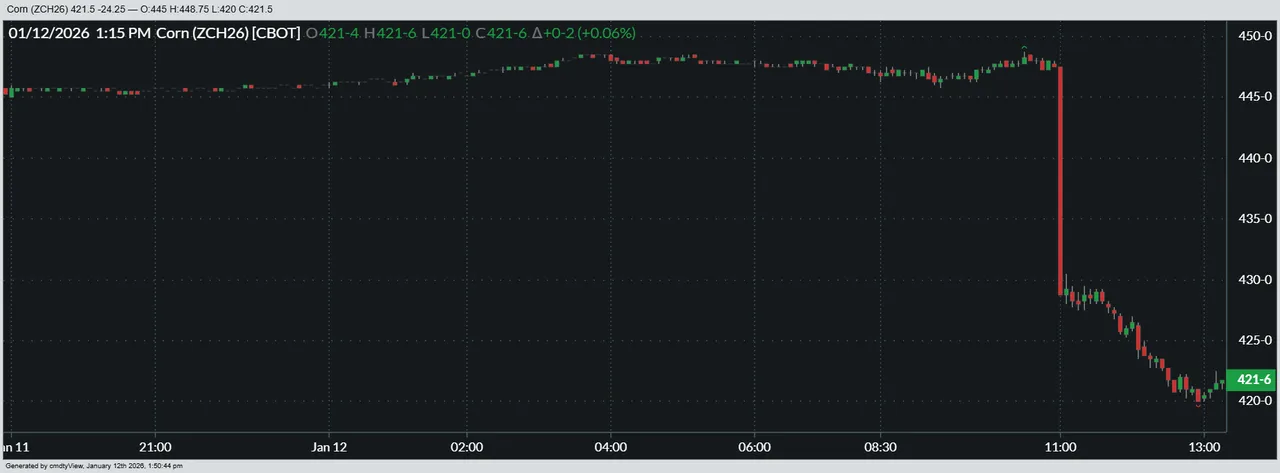
Analysts had their fingers crossed that USDA would lower its corn yield estimates from 186 bushels per acre in November down to 184 bpa in this morning’s World Agricultural Supply and Demand Estimates report. But the agency moved the needle in the other direction, serving up a record-breaking estimate of 186.5 bpa. USDA also moved production acres higher than 17 billion bushels for the first time ever. The result was a significant selloff that led to steep cuts for both corn and soybean prices. Winter wheat prices were also in the red today.
Light rains and/or snow will be possible across most of the central U.S. later this week, but very few fields are likely to gather more than 0.25” between Tuesday and Friday, per the latest 72-hour cumulative precipitation map from NOAA. Later this month, NOAA’s new 8-to-14-day outlook predicts some above-normal precipitation for parts of the Northern Plains and upper Midwest, with some colder-than-normal temperatures pushing into parts of the Great Lakes region and eastern Corn Belt between January 19 and January 25.
On Wall St., the Dow inched 13 points higher in afternoon trading to 49,517 as investors largely ignored news that the Department of Justice is opening a criminal investigation into Federal Reserve chair Jerome Powell. Energy futures were also in the green, with Brent crude oil futures rising around 1% higher this afternoon to move back above $64 per barrel. Gasoline futures were up more than 0.5%. The U.S. Dollar softened moderately.
Corn prices drove into the ditch
Prices dropped sharply immediately following this morning’s WASDE report and were not able to make any significant recovery following that quick selloff. March futures tumbled 24.25 cents lower to $4.2150, with May futures down 23.25 cents to $4.3050.
Click here to see more...