By Elaine Lander and Karey Windbiel-Rojas
Recent wet weather in many parts of the state has spurred emergence of winter weeds. How these weeds are managed varies by the type of weed and where it's growing. In IPM, identification is always the first step toward effective pest management. A few common weeds you may be seeing in your garden or landscape now are profiled below.
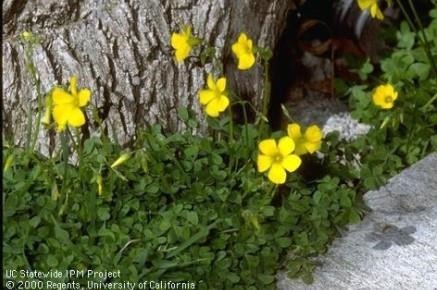
Oxalis
Also known as Bermuda buttercup, buttercup oxalis, or sourgrass, this weed grows throughout California's coastal and inland landscapes. It can be a weed in lawns, flowerbeds, groundcovers, and shruby areas around the home. It has an upright growth with 3 heart-shaped leaflets and produces bright yellow flowers in late winter or early spring. See Pest Notes: Creeping Woodsorrel and Bermuda Buttercup for management information.
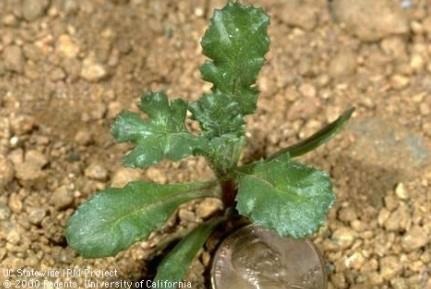
Groundsel
Common groundsel is a weed in the same plant family as sunflowers, dandelions, and thistles. Seedlings and young plants have deeply lobed leaves attached directly to the stem. Mature groundsel plants can grow up to 2 feet tall and have variable leaves that can be hairless to lightly covered with cotton-like hairs. The flowers eventually into a white puffball similar to a dandelion seed head. Find more information on identification and management in Pest Notes: Common Groundsel.
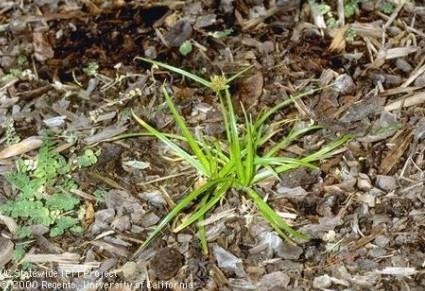
Nutsedge
Nutsedges are common weeds that thrive in waterlogged soil. Two of the common species in California are yellow nutsedge, Cyperus esclentus, and purple nutsedge, C. rotundus. Although they resemble grasses, nutsedges are true sedges with leaves that are thicker and stiffer than most grasses and arranged in sets of three at their base. In cross section, nutsedge stems are triangular, compared to grass stems which are hollow and round. Learn more about how to identify and manage these weeds in Pest Notes: Nutsedge.
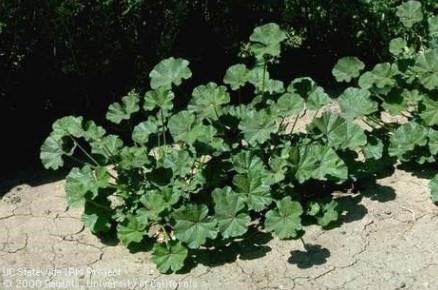
Mallows
Annual weedy mallow plants are found growing widely throughout California. Two species, cheeseweed or little mallow (Malva parviflora) and common mallow (M. neglecta), look very similar having leaves with five to seven rounded, somewhat crinkled lobes. Mallows grow in landscape beds as well as lawns which decrease the aesthetic value of the area. For more management information, see Pest Notes: Mallows.
Keep in mind, what makes a weed a weed is when a plant is growing in an area you don't want it. Some plants many consider weeds, others consider food for birds, insects, and other wildlife. Whether you choose to manage “weeds” in your landscape or not is a personal choice and may depend on what is growing, aesthetics, and how much effort you want to put in.
For help identifying weeds and finding management options, see the UC IPM Weed Gallery and the Weeds page for many other weed-related resources. You may also want to visit the Seasonal Landscape IPM Checklist to see what other activities you can do in your landscape to prevent, reduce, or manage other pests.
Source : ucanr.edu