By Charlie Cahoon
EPA issued a press release on October 27, 2020, approving new five-year over-the-top (for dicamba-tolerant cotton and soybean) registrations for Engenia and XtendiMax with VaporGrip and extending the over-the-top registration of Tavium Plus VaporGrip.
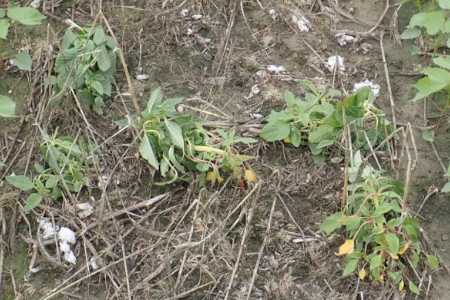
Palmer amaranth response to dicamba.
Key label changes to mitigate off-target movement of dicamba include the following:
- Requirement of a pH buffering agent or Volatility Reduction Agent (VRA) with all over-the-top applications of dicamba products to dicamba-tolerant cotton and soybean.
- The downwind buffer has been increased to 240 feet; the downwind buffer to threatened or endangered species areas has increased to 310 feet.
- No over-the-top applications of dicamba after June 30 for soybean or July 30 for cotton.
- Simplified label and use directions for applicators to more easily determine when and how to properly apply dicamba. For additional information, read the entire EPA News Release.
It is also important to note that training remains an annual requirement. Please look to your County Extension agent for information regarding the Auxin Herbicides-Best Management Practices for 2021. While in the midst of the Coronavirus pandemic, the 2021 training will likely look different from in the past. However, NC State University and N.C. Department of Agriculture and Consumer Services are committed to ensuring North Carolina applicators have ample options and opportunities for the auxin training.
Lastly, EPA has offered the states flexibility in tailoring label requirements to fit special local needs (24(c) labels). North Carolina has taken advantage of these labels in the past, so stay tuned for updates from NCDA&CS concerning additional application requirements or changes here in North Carolina.
Source : ncsu.edu