FCC analysis shows Canada farmland rent-to-price ratios declining as land values outpace rental rates.
Farm Credit Canada (FCC) has released a new economic analysis highlighting a growing gap between farmland values and rental rates across the country, a trend that will likely reshape expansion decisions for Canadian producers.
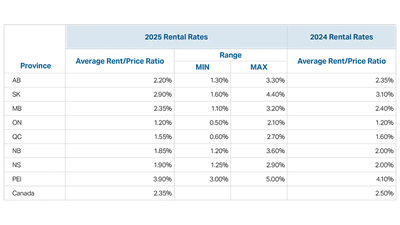
According to the analysis, Canada’s average farmland rent-to-price ratio declined to 2.35 percent in 2025, extending a multi-year pattern of compression. Canada’s rent-to-price ratio saw a decline from 2.70 percent in 2020 to 2.50 percent in 2024, before reaching 2.35 percent in 2025.
The highest rent to price ration was once again PEI with 3.90 percent, next highest was 2.90 percent in Saskatchewan. Ontario was one of the lowest with 1.20 percent.
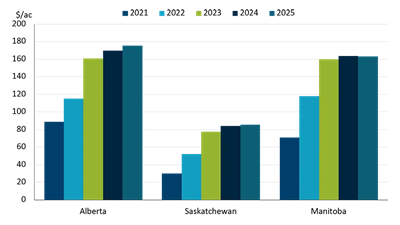
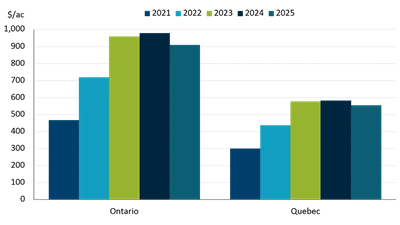
While farmland values have continued to climb in most regions, rental rates have increased at a much slower pace, resulting in a tighter and more predictable return profile for landowners and a different set of considerations for producers seeking to expand.
Renting land remains a foundational strategy for farm growth, particularly for producers looking to scale operations without committing large amounts of capital upfront. However, FCC economists note that the structure of many rental agreements limits how quickly rents can adjust in response to rapidly appreciating land values. Fixed lease terms, multi-year contracts, and competitive pressures have contributed to rental rates remaining relatively stable even as land prices move higher.
Across Canada, most provinces continue to post rent-to-price ratios within a narrow range of 2 percent to 3 percent. This consistency suggests that rental markets are influenced more by local production margins, crop returns, and tenant affordability than by headline land value increases.
In regions where land values have risen sharply, the gap between ownership costs and rental expenses has become more pronounced.
The FCC analysis points out that this widening gap presents both opportunities and challenges.
Renting Farmland
In the short term, renting often offers a clear cash flow advantage over purchasing land. Lower upfront costs and predictable lease payments can help preserve working capital, manage risk, and maintain flexibility during periods of margin pressure or economic uncertainty. For many producers, these benefits make renting an attractive option for near-term expansion.
Farm Ownership
At the same time, FCC emphasizes that ownership continues to play an important role in long-term business planning. While purchasing land may strain cash flow initially, it can support long-term wealth creation, balance sheet strength, and intergenerational transfer goals. Rising land values have historically contributed to farm equity growth, which can improve borrowing capacity and long-term financial resilience.
As land values and rental rates continue to diverge, producers are encouraged to take a balanced approach when evaluating expansion opportunities. Decisions should account for current affordability, expected returns, financing conditions, and long-term business objectives.
The analysis suggests that comparing the full cost of ownership with rental alternatives, rather than focusing solely on purchase prices or rental rates, is increasingly important.
FCC economists also note that regional variation remains significant. Local supply and demand dynamics, competition for land, commodity prices, and non-farm influences all play a role in shaping both land values and rental markets. As a result, expansion strategies that work well in one region may not translate directly to another. As is always the case, being aware of what is happening in your region may be more important than ever.
The report underscores the importance of informed decision-making in an environment where asset values continue to evolve faster than many income measures. By understanding how rent-to-price ratios affect cash flow and long-term value, producers can better align land strategies with their overall business goals.
For the latest insights and in-depth analysis on farmland markets and agricultural economics, visit FCC Economics at fcc.ca/Economics. FCC economists are available for interviews and commentary on current trends shaping Canadian agriculture.
Read the full FCC report.