As the cotton harvest is fast approaching the end, it is time to think about taking nematode samples in your cotton fields. In order to have a good representation of nematode populations within a field, predictive nematode samples should be taken in late fall usually just after cotton has been harvested. It is better to take samples prior to harvest, but most growers find it easier to sample after the cotton stalks are mowed. However, do not wait too long after harvest to sample because nematode populations will begin to decline once their food source is removed. Below is a table that lists the optimum times to take samples in cotton, as well as, peanut and soybeans.
.png)
Each soil sample should represent no more than a 20 acre field or section of a field. The smaller the field area you sample, the more accurate your results will be. In each section of the field take 12 to 15 cores. Take samples 8 inches deep within the plant root zone. Place these in a bucket and thoroughly mix the sample being sure to break up any clumps. You should have approximately one quart of soil in the sample that you send off. The soil should be transferred into a labeled plastic bag with sampling date for nematode assay. Once sampled is put in a zip-lock type bag, it should be kept cool (refrigerate if possible) and not allowed to get dry. Samples should not sit in a hot vehicle or even in direct sunlight because this can kill any nematodes in the sample and lead to inaccurate results.
Avoid sampling fields that are too wet or too dry. A good rule of thumb is that it is best to sample soil that would be about right for good seed germination.
Samples should be taken in a random manner throughout the area of the field being sampled. Commonly used patterns included modified “X’s” or “Z’s” that cover the entire area. Samples should include all areas of the field, not just poor areas that show signs of nematode damage. Submit samples to the laboratory quickly.
When you get the nematode results back from the lab, what do they mean? IF you take a sample results from a cotton field, the illustration below is from the UGA publication Guide for Interpreting Nematode Assay Results for cotton. This resource has information about numerous other crops.
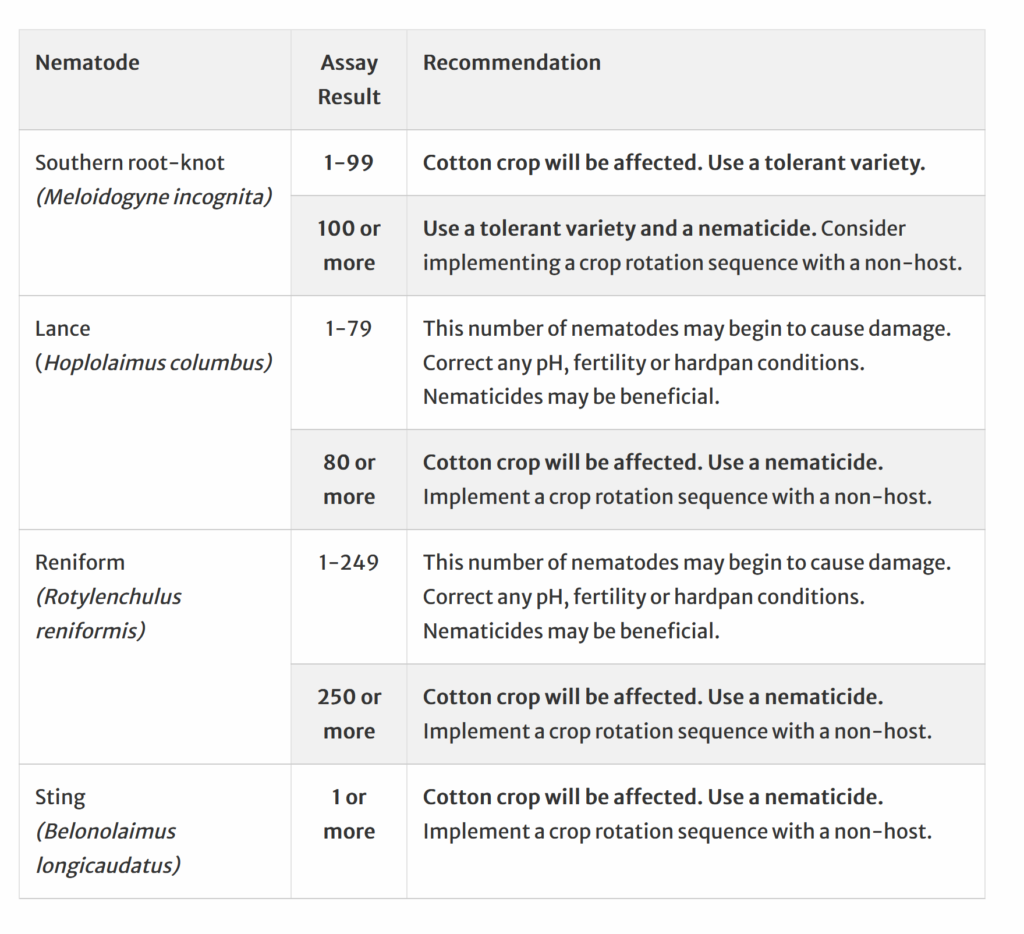
Source : uga.edu