Farms.com Home   News

Lep Monitoring Update: Final Fall Army Update

By Amy Raudenbush and Kelley Tilmon et.al

Fall armyworm trap numbers from September 19th - 25th slightly increased over the past week to 6.6 moths per trap (up from 4.6), but overall remain low for the state. Three counties reported an average over 7 moths per trap including Hardin, Paulding and Sandusky (Figure 1).  This will be our last week reporting FAW trap numbers for the CORN newsletter.
Fall Army Worm Caterpillars, Photo Courtesy of Mark Badertscher, 2021

Fall Army Worm Caterpillars, Photo Courtesy of Mark Badertscher, 2021

Fall Armyworm Moth Map

September 19 – September 25, 2022
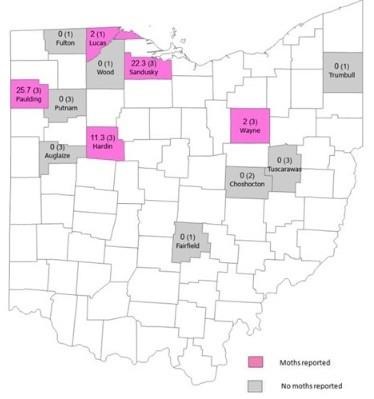
Average fall armyworm (FAW) moths captured from September 19th through September 25th. The large number indicates the average moth count for the week and the small number in parentheses is the total traps set up in the county

Figure 1. Average fall armyworm (FAW) moths captured from September 19th through September 25th. The large number indicates the average moth count for the week and the small number in parentheses is the total traps set up in the county.

Source : osu.edu

Trending Video

Why the Fertilizer Crisis Won’t End When the Iran War Does

Video: Why the Fertilizer Crisis Won’t End When the Iran War Does

The fertilizer crisis didn’t start with war — it revealed a system already under strain.

Seed World U.S. Editor Aimee Nielson breaks down what’s really happening in global fertilizer markets and why the impact on farmers may last far longer than current headlines suggest. Featuring insights from global fertilizer expert Melih Keyman and industry leaders Chris Abbott and Chris Turner, this conversation explores:

Why fertilizer supply was already tight before geopolitical disruption

What the Strait of Hormuz and global trade routes mean for input availability

How rising nitrogen prices are crushing farmer margins

Why this crisis could affect seed choices, crop mix and acreage decisions

The hidden risks around phosphate and sulfur supply

Why experts say this situation may get worse before it gets better

Even if tensions ease, the underlying issues — supply constraints, investment gaps and purchasing behavior — are still in play.

Watch to understand what this means for farmers, the seed industry and the future of global food production.