By Sarah Lancaster and Jeanne Falk Jones
Pre-emergence herbicides are critical for successful weed management in grain sorghum, especially for difficult to control species like Palmer amaranth. However, difficult weather conditions this spring resulted in poorer than expected weed control from pre-emergence herbicides in some locations in Kansas (Figure 1). This situation has resulted in questions asking how to control rapidly-growing Palmer amaranth in grain sorghum fields.
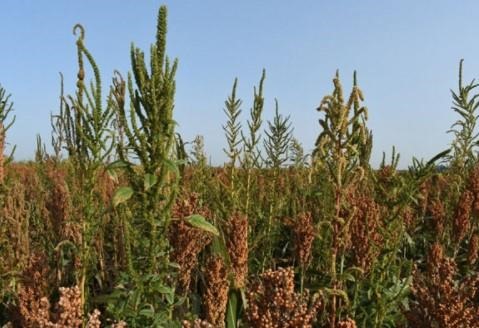
Figure 1. Palmer amaranth in a well-advanced grain sorghum field that escaped effective treatment earlier in the growing season.
Unfortunately, post-emergence herbicide options in grain sorghum are limited. All of the available options are most effective when small (under 4 inches tall) weeds are targeted. This article will review the pros and cons of key post-emergence herbicides that control Palmer amaranth in grain sorghum. Combinations of the herbicides listed here will generally improve control.
Atrazine can control sensitive populations of Palmer amaranth and can be combined with other herbicides to enhance effectiveness. Recommended rates range from 0.25 to 2.0 pounds of atrazine (0.5 to 4 pints). Atrazine should be applied with crop oil or surfactant to control emerged weeds. Atrazine can be applied to grain sorghum between 3-leaf and 12 inches or between 6 and 12 inches in western Kansas. Observe rate limits for your area.
Aim (carfentrazone) is a Group 14 herbicide that can be applied to grain sorghum between 4 inches and boot stage. It is less effective than some of the other herbicides in this article and requires good coverage for maximum effectiveness. Aim can be tank-mixed with atrazine, 2,4-D, dicamba, bromoxynil, and Huskie. Aim is likely to burn grain sorghum leaves, especially if applied in very hot, humid weather or if applied with crop oil. Leaf burn will also be greater if Aim is applied with bromoxynil.
2,4-D is an effective herbicide option to control Palmer amaranth. However, crop response should be expected, especially if applied in hot, humid conditions. Crop responses can include rolled leaves, lodging, and brittle stems. Grain sorghum is most tolerant of 2,4-D applications when it is 5 to 10 inches tall. Drop nozzles should be used when applying 2,4-D to grain sorghum greater than 8 inches. To reduce crop response, apply lower rates (2/3 pint) with atrazine, Aim, bromoxynil, or Huskie. Using crop oil in tank mixes with 2,4-D, will increase crop injury.
Dicamba, at the rates used in grain sorghum (0.5 pint), may be less effective on Palmer amaranth than 2,4-D. It can be applied to grain sorghum between 2 and 15 inches. Drop nozzles should be used if grain sorghum is 8 inches or taller to avoid damaging seed heads. Crop response, including rolled leaves and lodging should be expected, especially if applied in hot, humid conditions. Dicamba can be tank-mixed with Aim, atrazine, and bromoxynil.
Bromoxynil can be applied from the 3-leaf stage through boot stage. Crop response will be less with bromoxynil than other herbicides, but bromoxynil alone will not control Palmer amaranth larger than 4-leaf. Adequate spray coverage is needed for maximum effectiveness.
Huskie (pyrasulfutole+bromoxynil) is most effective when mixed with atrazine (up to 1 pound). When used alone, it can be applied between 3-leaf and 30 inches and should be applied with HSOC (high surfactant oil concentrate) or AMS + NIS. Huskie will cause leaf burn, which can be greater in fields where mesotrione was applied pre-emergence. Huskie plus atrazine may be tank-mixed with phenoxy broadleaf herbicides such as 2,4-D or dicamba as needed.
Source : ksu.edu