By Stephen Wegulo
In recent weeks, there have been widespread hailstorms in the wheat growing regions of Nebraska, including the Panhandle, southwest, south-central and southeast. These hailstorms have shattered grain to the ground in many wheat fields (Figures 1 and 2). Volunteer wheat will emerge from grain that was mature enough to germinate when it was shattered by the preharvest hail. When the current wheat crop turns color and starts to dry down, wheat curl mites — the vectors of Wheat streak mosaic virus (WSMV) — will move from it and to the volunteer wheat. If the volunteer is not controlled this summer, it will act as a green bridge for both the mites and virus between harvest and fall planting of winter wheat. The mites will then move from the volunteer to the newly emerged wheat and transmit the virus.
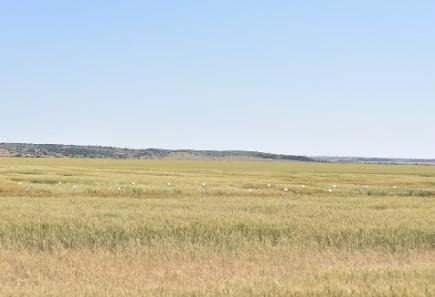
Figure 1. A Red Willow County wheat state variety trial in a grower’s field damaged by hail on June 7. Photo taken on June 15, 2022.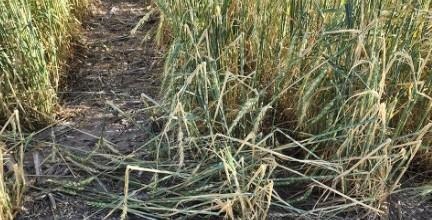
Figure 2. Close-up of hail damage on wheat in the field shown in Figure 1. Photo taken on June 15, 2022.Wheat streak mosaic is the most devastating virus disease of wheat in Nebraska. It occurs as part of a complex of three viruses: WSMV, Triticum mosaic virus (TriMV), and High Plains wheat mosaic virus (HPWMoV). WSMV is the predominant of the three viruses, all of which are transmitted by wheat curl mites. Infected plants have mottled and streaked leaves and may be stunted with tillers growing laterally (Figure 3) instead of upright. Streaks are parallel, discontinuous and greenish-yellow. Severity during the growing season can range from mild with only field edges affected to severe yellowing and stunting with entire fields affected (Figure 4). Total loss often results in severely affected fields.
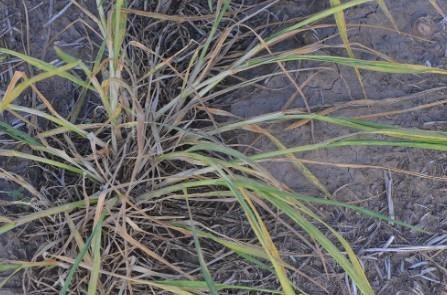
Figure 3. A wheat plant severely infected by wheat streak mosaic. Note the stunting and lateral growth of tillers. Photo taken on May 15, 2017 in the field shown in Figure 4.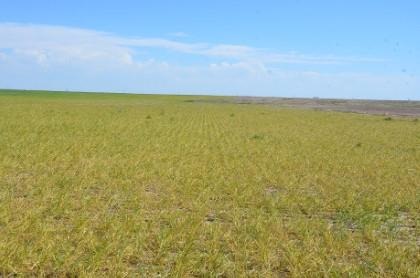
Figure 4. Severe wheat streak mosaic in a grower’s field in Deuel County in 2017. The disease caused total loss in this and several other fields in the area. Photo taken on May 15, 2017.The greatest risk for occurrence of wheat streak mosaic is volunteer wheat that emerges from grain shattered by pre-harvest hailstorms. Other risk factors include pre-harvest volunteer wheat in summer crops such as sunflower; grassy weeds, for example barnyard grass and green foxtail; a prolonged warm fall/mild winter; early planting; and planting wheat next to late maturing mite-virus hosts, for example corn or foxtail millet.
Management
This year, given the widespread pre-harvest hail in the wheat growing regions of Nebraska, it is very important to take measures that will minimize the risk of occurrence of wheat streak mosaic in next year’s winter wheat crop. These measures include:
- Control pre-harvest volunteer wheat in wheat fields and summer crops before planting winter wheat this fall. Volunteer should be completely dead at least two weeks before planting.
- Control post-harvest volunteer wheat.
- Control grassy weeds.
- Avoid planting wheat too early.
- Avoid planting wheat next to late maturing mite-virus hosts, such as corn and foxtail millet.
- Plant resistant/tolerant varieties if available and adapted to local conditions; most varieties are susceptible. See the Nebraska Fall Seed Guide and the K-State Wheat Variety Disease & Insect Ratings.
- Plant high risk fields last. These are fields adjacent to grassy weeds and late maturing mite-virus hosts, such as corn or foxtail millet.
Source : unl.edu