Farms.com Home   News

Remember Soybean Aphids? They Might be in your Fields

Remember Soybean Aphids? They Might be in your Fields

By Andy Michel and Kelley Tilmon

Soybean aphids have always been around Ohio, but it has been a while since we have had many fields with high populations.  Based on recent scouting, we have noticed increasing populations of soybean aphids.  As we go into the critical growth stage of soybean, this is also the most important time to check your fields for soybean aphids and see if you have exceeded the threshold of an increasing population of 250 aphids per plant.
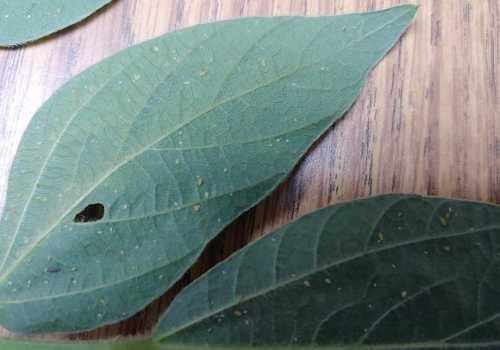
soybean aphid

To scout for soybean aphid, walk at least 100 ft from the field edge and count the number of aphids from 5 plants in 10 different locations.  If your average is greater than 250 per plant, you’ll need to come back and re-scout 3-4 days later.  If the aphid population increased in that time, an insecticide application is recommended.  Keep in mind that to accurately determine the threshold, scouting should be performed at least weekly and multiple times a week if aphids are active in fields. 

Soybean aphids can cause yield loss up to the late R5 to early R6 growth stage. If an application is necessary, there are several effective insecticides available.  Although some soybean aphid populations in the western corn belt are resistant to pyrethroids, we have not seen any evidence of this in Ohio. 

Source : osu.edu

Trending Video

Sclerotinia and Lygus in Seed Canola: Field Update with George Lubberts, CCA | Enchant, Alberta

Video: Sclerotinia and Lygus in Seed Canola: Field Update with George Lubberts, CCA | Enchant, Alberta

Join Certified Crop Advisor George Lubberts for this Prairie Certified Crop Advisor (Prairie CCA) field update from Enchant, Alberta. In this 12th video of the series, George takes us into a seed canola field where the male rows have been removed and the female plants are filling pods. This video was taken in the third week of August 2025.

George discusses the early signs of sclerotinia stem rot, explaining how infection begins in the stem, impacts pod development, and leads to premature ripening. He also shares insights on lygus bug management, including timing of spray applications to minimize feeding damage and maintain seed size and quality.

With cool, damp summer conditions, George notes that while disease pressure is present, overall field health remains good. The crop is just beginning to show early seed colour change, signaling progress toward maturity.

Topics Covered:

•Sclerotinia stem rot identification and impact

•Managing lygus bugs in seed canola

•Crop stage and seed colour change observations

•Timing insecticide sprays for optimal protection

•Insights from a CCA field perspective in southern Alberta