By Amber Vinchesi-Vahl
Root-inhibiting herbicides (like pendimethalin or trifluralin) are soil-applied and pre-plant incorporated as a standard practice for conventional processing tomatoes in the Sacramento Valley.
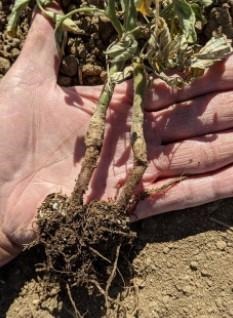
Earlier this year, I visited a young processing tomato field with herbicide injury on a significant amount of plants. The plants had the swelling I've seen with trifluralin injury on tomatoes and no/very little root growth above the root ball/transplant plug. They were also very brittle and easily snapped in half which can be characteristic of pendimethalin injury. Some of the affected plants had snapped at the weakened area likely from the north winds over the previous weekend. More plants were affected in the sandier pockets of the field, where less herbicide is tied up compared to clay soils. There was new root growth in some areas, specifically in areas with better soil moisture.
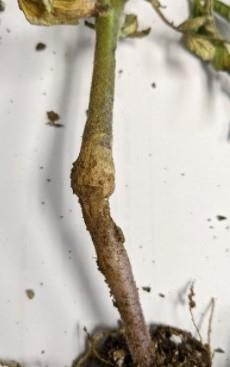
Pendimethalin was applied pre-plant, a common practice for this particular grower, but never with this result. So the question remained, “how did this happen?” If the herbicide was only in the top two inches of soil and the transplant plug/root ball is inches below that, how did the plant take up the herbicide to cause this damage?
Both trifluralin and pendimethalin are root-inhibiting herbicides used to target small early-season weeds. They can cause brittle stems and swelling at the soil line on broadleaf plants. Though these herbicides are not generally translocated, they can be taken up by roots and stems. I reached out to Brad Hanson, UC Davis CE Weed Specialist, and he suggested that since there was some new root growth, the concentration of herbicide deeper in the profile was likely lower and the problem was in the shallow layers, which led to the stem damage. The question still remains, why was injury worse this year than in previous years?
I was told similar injury (not from pendimethalin specifically but similar herbicides) had been seen more in 2021 on tomatoes than usual, possibly because of the low water at planting.
Source : ucanr.edu