By Ashley Dean and Erin Hodgson
Stalk borer is an occasional pest of corn, but it can be persistent in some fields, especially those fields near fence rows, terraces, and waterways that serve as overwintering sites. Tracking degree days is a useful way to estimate when common stalk borer larvae begin moving into cornfields from their overwintering hosts. Foliar insecticide applications are only effective when larvae are migrating and exposed to the insecticide. Start scouting corn for larvae when 1,300-1,400 degree days (base 41°F) have accumulated. Parts of southern Iowa have reached this important benchmark (Figure 1); therefore, scouting for migrating larvae should begin now to make timely treatment decisions.
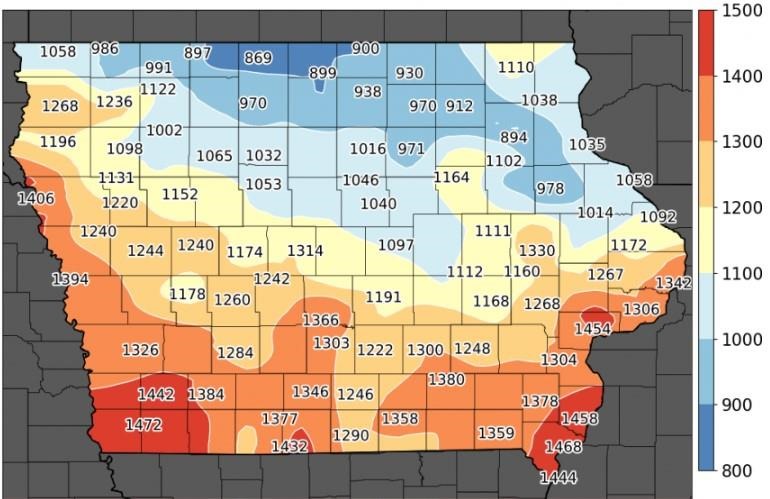
Figure 1. Degree days accumulated (base 41°F) for stalk borer in Iowa (January 1 – June 6, 2022).
This encyclopedia article details stalk borer identification, sampling, and management and provides information on high-risk fields. Stalk borers tend to re-infest the same fields, so prioritize scouting fields with a history of stalk borers, paying close attention to field edges. Finding “dead heads” in nearby grasses or weeds is an indicator of stalk borers in the area. The larvae are not highly mobile and typically only move into the first four to six rows of corn. Young corn is particularly vulnerable to severe injury; plants are unlikely to be killed once they reach V7 (Photo 1).
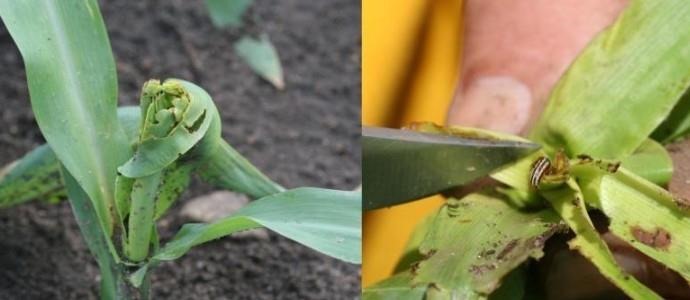
Photo 1. Stalk borer larvae can shred corn leaves and destroy the growing point.
No rescue treatments are available for stalk borer, but tracking degree days and scouting the field can determine whether larvae are present and still migrating. Insecticide applications are only effective while larvae are migrating to corn; once larvae have bored into the stalk, an insecticide will not reach them. Economic thresholds are based on market value and plant growth stage and may be found in the stalk borer encyclopedia article.
Source : iastate.edu