By Elodie Reed
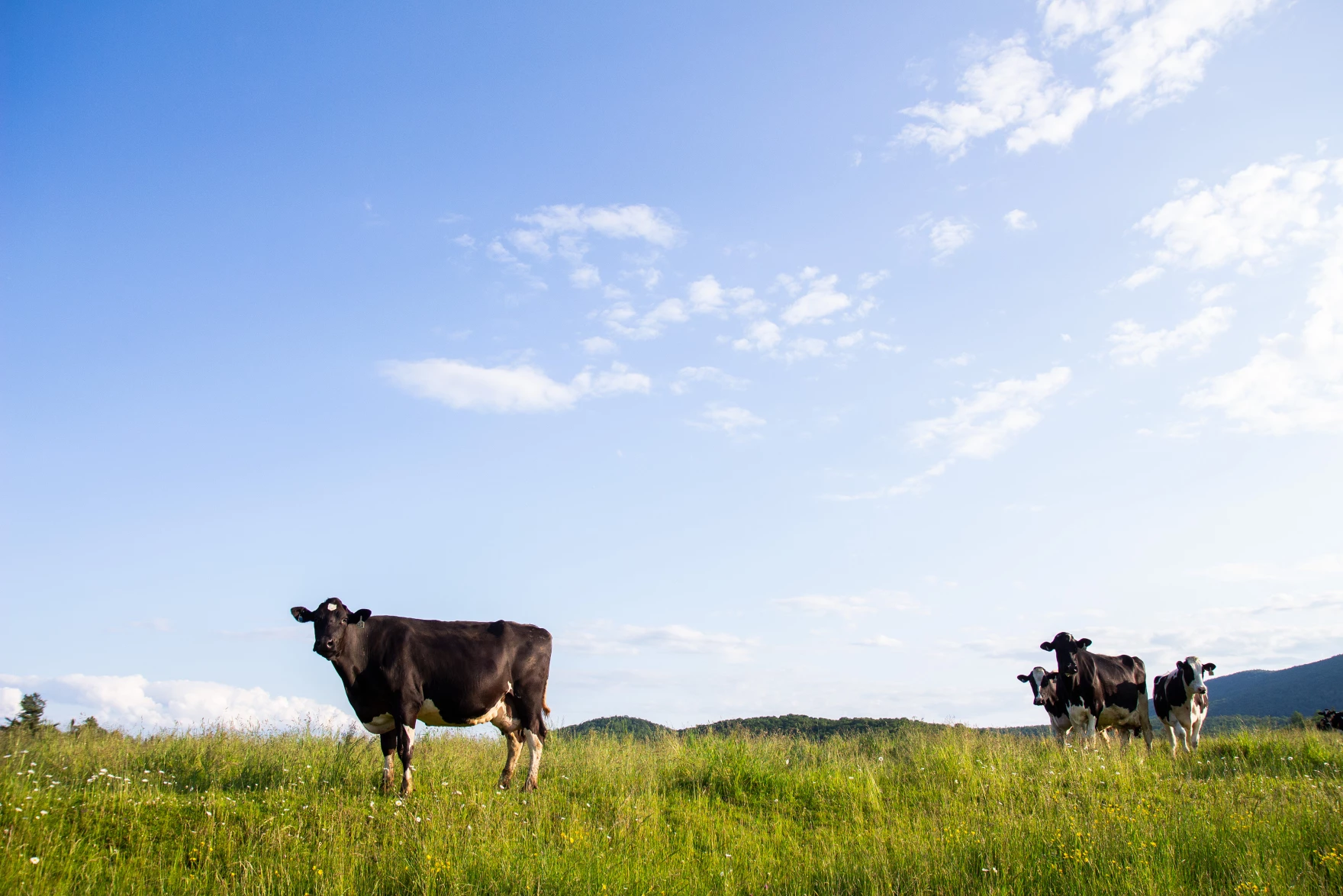
Beginning today, Vermont organic dairy farmers can apply for relief funding from what the Agency of Agriculture calls "extreme market challenges."
This year's budget — which Gov. Phil Scott vetoed before the Vermont Legislature approved it in an override vote — set aside $6.9 million in one-time payments.
Vermont farmers who processed or shipped organic milk in 2022 will receive $5 for every 100 pounds of milk they produced that year. They must be "in good standing" with the state agriculture agency to be eligible. Applications are due by Oct. 20, 2023.
Laura Ginsburg, who oversees dairy development and innovation for the agriculture agency, says these grants are not competitive.
"We're not going to run out of money, because the Legislature put enough money for everybody to be fully paid," she said. "So it's better off if the farmers who will apply take a bit of time to get themselves organized and ready so that they submit a complete and correct application the first time, and then we can really get the payment to them a lot faster."
Ginsburg said payments will range between roughly $5,000 and $200,000. She noted Vermont is the only state in the nation to set up this kind of relief payment program for organic dairy farmers.
"When you think about 25% or 30% of the [dairy] industry being impacted in this way, that's a pretty substantial number of farms and economic impact to the state and to the Northeast organic dairy sector as a whole," Ginsburg said. "Vermont's a major player there. And there's there's real reasons to keep these farms in business."
"When you think about 25% or 30% of the [dairy] industry being impacted in this way, that's a pretty substantial number of farms and economic impact to the state and to the Northeast organic dairy sector as a whole."
Laura Ginsburg, Vermont Agency of Agriculture
State lawmakers included the funding in the budget bill following testimony from organic dairy farmers who said they were in danger of losing their livelihoods due to forces beyond their control: inflation, the war in Ukraine, supply chain issues, and drought.
The Northeast Organic Farming Association of Vermont says organic dairy farmers have been in "an impossible economic situation due to spiking costs of production over the past year" without a matching increase in the price they're paid for milk.
According to data from the Agency of Agriculture, Vermont has lost more than 40 certified organic dairy farms since 2020.
Among those hanging on is fourth generation farmer Marcy Guillette, who milks around 75 cows in Derby. The 47-year-old is renting the farm from her parents, and hopes to buy it someday.
For now, though, she says she'll use the newly available state funds to pay her bills.
"That money will be spent locally," Guillette said. "I've got my local soap guy, I've got my hoof trimmer, the guy that spreads manure."
For Abbie Corse and her family's organic dairy in Whitingham, which milks 54 cows, the funds should help with repairing equipment, like the hay bagging machine that's as old as she is.
"I'm 40 this year, it's 40 years old, it broke — it broke in a very big way," she said with a laugh. "The bagger broke, the baler broke, the bale wagon broke."
But beyond equipment repairs, Corse said this relief program represents an important shift in how Vermont prioritizes small-scale dairy farming, which has shrunk over time.
"There are so few small conventional farms left, and these are — really the organic dairies are really the last of the small dairies," she said. "I hope that that's the way in which we decide to move forward, is by thinking more about food system, and how different sizes of farms and different types of farms fit into that, and, you know, how we build... maintain a resilient food production landscape."
Click here to see more...