Some people say that everything is bigger and better across the border. Growing up an hour from Michigan, in Chatham, ON, I know this is not always the truth. However, as I made my way to central California this September, I had several jaw-dropping moments while touring the countryside.
As part of Alltech’s on-going employee support program, I travelled to our Fresno, California office to train with the marketing gurus there. They are known for their numerous successful customer programs, and have been focusing lately on creative campaigns to support the dairies in the region that are struggling to make a profit.
I came to them pretty bright-eyed -- excited to see Palm trees, and drive through the San Joaquin foothills on my way from the San Francisco airport. My excitement grew when I learned I would be touring a local horse farm and a dairy, too.
I hadn’t really thought about how farming would differ in California, versus Ontario. We have dairy cows, grape growing, and fruit trees, too. I assumed it would be hotter and, because of regional crop differences, the feed ingredients would change. What I hadn’t thought about was the enormity of the farms in comparison to home. Large scale production is the norm, and a farm here is made up of more than family members.
The drive to our farm tours was almost better than the destination. From Fresno, we drove through Selma, which is the raisin capital of the world. I was so excited to see the grape vines starting on the roadside and stretching out as far as you could see. If you looked closely, you could see square pieces of what looked like parchment paper at the start of the rows, with handfuls of grapes drying in the sun. I was shocked that they were left in the open -- a treat to any critter that passed by. If the car wasn’t moving, I probably would have scooped up a few! This is when I learned that raisin farmers use pieces of reflective paper that distract and scare away any birds or rodents interested in the drying grapes. Shiny objects seem to distract me a lot, too!
The corn fields in California are ones from fairy tales, with stalks towering over the trucks parked beside them. With the heat and long growing season, farmers irrigate, instead of doing the Ontario rain-dance. This produces incredibly tall stalks for animal feed (silage), but with less kernels than the plants grown in the Midwest and Ontario.
We also passed funny-looking corn fields that turned out to be sorghum. These plants don’t grow nearly as tall as the corn, and are fed mostly to heifers. There were also soft fields of cotton, another feed ingredient sometimes used in dairy diets.
 When we arrived at DG Bar Ranch, I knew something was different because this farm had four marked entrances. A dairy farm with a world-class horse training facility and boarding for 70 horses, DG Bar Ranch is a family enterprise like no other. I sat down with Rochelle DeGroot who oversees the dairy and horse operations and learned about their equine facilities. Their featured boarder is Idocus, a 19-year-old stallion, as well as Olympic champion and World Cup winner. In addition to training, they also breed the horses, and had a 16-year horse show on their premises – the largest in the Western States.
The performance horses on the farm are fed strictly horse feed. The grass forage is limited, and used just for the non-competing horses. The farm owners use the hundreds of acres of crops surrounding the horse barns to feed their 20,000 dairy cows spread out in barns at multiple locations.
While we dined on Dutch cookies and watched the horses being trained, I learned about Rochelle’s daughter, Ashlyn, an up-and-coming rider with the awesome advantage of riding the Olympic champion, Idocus. With so many years on the circuit, Idocus trains his rider, instead of the other way around. This high school sophomore will be headlining the equine media for many years to come.
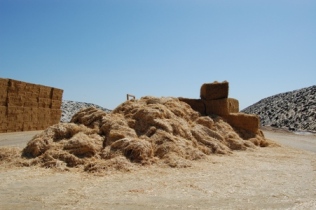
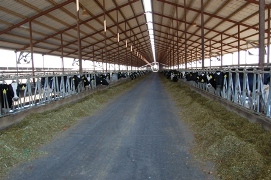
From there, we continued on to EJ deJongs Dairy and met with EJ, the dairyman. His herd of 5,000 is average size for the region, employing approximately 42 farmhands, with bulk tanks that can hold 168,000 L. While I was being driven through the open-air barns, I noticed a more colourful ration than in our feed in Ontario. EJ uses carrots and tomato pulp in the rations, as well as almond husks to provide fibre. The amount of feed that goes through this farm is so significant; he has trucks dropping off loads every day of the week. This milking parlour was impeccably clean, considering the number of cows that are milked three times a day. The systems EJ has set up are so exact, and everything is tracked with RFID tags in the cows’ ears. With a swipe of a scanner, he knows which cows should be in their respective barns and when vet checks are needed.
EJ has faced challenges with the economic crisis, as many dairy farms in the U.S. have. However, he has been working with Alltech to ensure the health of his animals is maintained. And wanting to show support for his employees and give them a greater sense of self-worth, he has utilized the Alltech Dairy Workers Program.
 The program puts dairy farm workers in a classroom-like setting on the farm they work at, learning about multiple dairy issues (health, reproduction, feeding practices, etc.). Alltech provides the speakers, who are all fluent in Spanish, the first language for the majority of the dairy workers.
This past spring was the first session of the Dairy Workers Program on EJ’s farm. When the employees were not in the classroom, he organized a soccer tournament for them to play in, on the field he built on his farm. He invited the neighbouring dairies and their workers to also join in with the Program and the tournament. The combined event was so successful, the organizers ran out of food!
Although there are stark differences in farming practices within our continent, it’s also comforting to know that farmers are willing to open their doors and lead a stranger on a tour. It’s a feeling you can only get in agriculture, and I’m proud to say this is the industry I work in.
Editor’s Note: Kate Roberts is the Marketing Coordinator for Alltech, a natural animal health and performance company. The commentary is sponsored by Alltech. For more information, go to Alltech.com.