Proceeds from a cattle sale will benefit the High River Hospital’s maternity ward
By Diego Flammini
Staff Writer
Farms.com
An Alberta 4-H club donated the proceeds from a cattle sale to help a local hospital improve its maternity care.
Between private donations and the sale of a 1,225-pound steer, the Longview 4-H Beef Club raised $42,700 for the High River District Health Care Foundation. The High River Hospital will use the funding for maternity ward renovations.
That feeling may be because the department holds a special place in members’ hearts, said Cathy Couey, fund development and communications officer for the foundation.
A number of community members have been born at the High River Hospital, she said.
Longview 4-H has donated proceeds from cattle sales to the local hospital for the past six years.
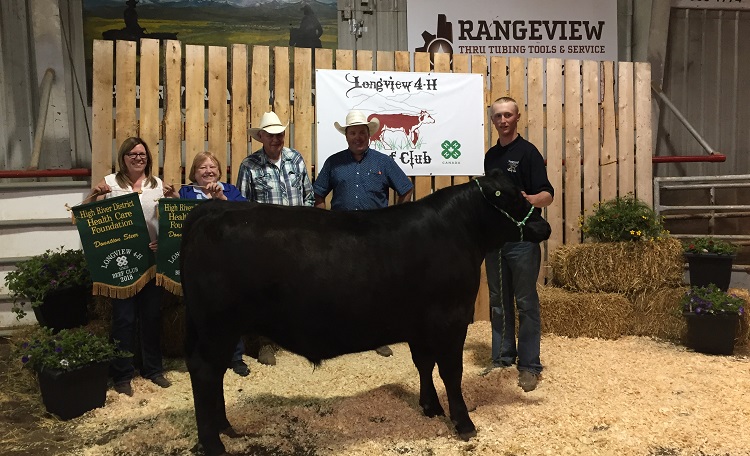
L to R: Cathy Couey, May and John Lockhart, Club Leader Stephen Hughes, and 4-H member Cole Cartwright with the donation steer.
Photo: HighRiverOnline
In total, the club has donated over $200,000 to the hospital. Some donations helped High River Hospital purchase Panda Warmers last year, which are used for weighing and resuscitating newborns.
And members recently heard about their donations hard at work, Couey said.
“Just a few days before the (May 21) sale, there was a story on Twitter about an original Longview 4-H beef club member delivering a baby and needing that warmer,” she said. “The members felt pretty good knowing the donations were making a real difference.”
Local producers are also part of the equation.
May and John Lockhart from High River, Alta. raised and processed the steer on behalf of the beef club and have been doing so for six consecutive years.
The ranchers continue to find ways to give back to the community, said Stephen Hughes, Longview 4-H Beef Club leader.
“They’ve been long-term supporters of this project,” he told Farms.com today. “I know that they donated the meat back to the hospital, so it’s a story that has many positive aspects to it.”
Projects like these are a good way to bring communities together, Hughes and Couey said.
“Hospitals are certainly important to any rural community,” Hughes said. “A lot of people in the community get involved on this project and it’s just a tremendous feeling.”
“It’s great that the young people in the 4-H club are so involved in the community,” Couey said. “They’re tomorrow’s community leaders and an impressive group of young people. It’s fantastic that this club is so committed to teaching young people about giving back.”