Diamondback moths and wheat midge were present
By Diego Flammini
Assistant Editor, North American Content
Farms.com
Scouts in some Alberta fields discovered diamondback moths and wheat midge, according to Scott Meers, insect management specialist with Alberta Agriculture and Forestry.
But despite their presence, the diamondback moths shouldn’t be controlled just yet.
“We probably shouldn’t be considering spraying at this point,” Meers told Call of the Land yesterday. “Generally we lose a few flowers to diamondback moths, but canola in the early flowering period is able to make more flowers and compensate for any flower loss.”
The presence of the insect acts as a warning, Meers said. If the pests aren’t controlled at some point, they could have a high population within fields.
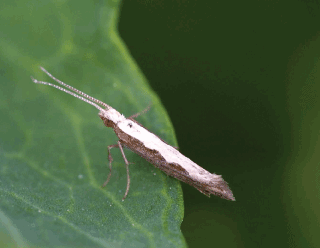
Diamondback moth
Photo: Canola Council of Canada
Farmers should “consider insecticide application when 20 to 30 larvae/0.1 m2 are present at the advanced pod stage,” according to the Canola Council of Canada. “This works out to approximately two to three larvae/plant if the plant population is close to 100 plants/m2.”
And wheat producers with crops beginning to head should be scouting for wheat midge.
“We’re in the middle of the midge emergence based on current models,” Meers told Call of the Land. “(Farmers) should be scouting, especially to the east of Edmonton. We’ve heard of some growers needing to spray already.”
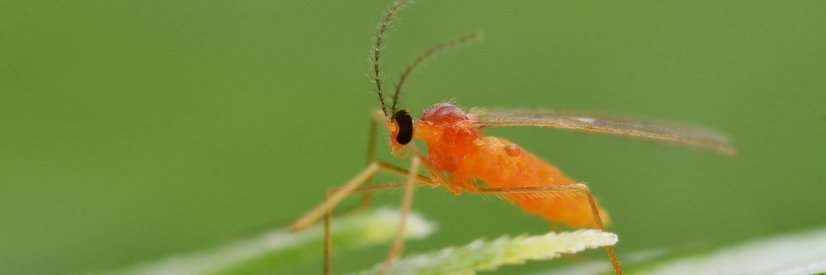
Wheat Midge
Alberta Agriculture also recently put out a video highlighting what producers should look for when scouting for wheat midge.