Farms.com Home   Ag Industry News

Fines for illegally spraying pesticides in Missouri could be on the rise

State Rep. Don Rone plans to introduce a bill in January

By Diego Flammini
Assistant Editor, North American Content
Farms.com

The Missouri Department of Agriculture (MDA) is investigating about 115 complaints related to pesticides and at least one State Representative feels changes are needed.

State Rep. Done Rone plans to pre-file legislation in December which would increase the penalties for those who misuse or illegally spray pesticides under the Missouri Pesticide Use Act.

Judy Grundler, division director for plant industries MDA told St. Louis Public Radio that there’s usually about 80 complaints annually.

Grundler said seventy investigations are ongoing and encompass an area spanning 40,000 acres and 400 fields. Soybeans, peaches and watermelons are among the damaged crops reported.
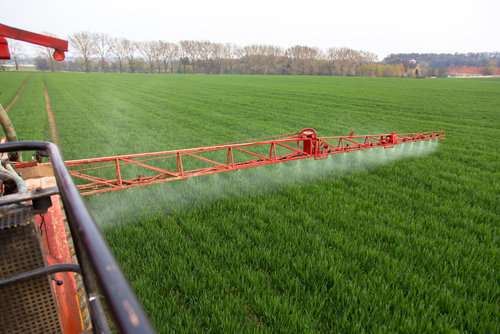
Spraying

The current penalty is $1,000 per field. Under Rone’s bill, that penalty could increase to $10,000 per field.

Mssourinet reports that Rone is going to ask House Speaker Todd Richardson to fast-track the bill in January in the hopes it gets passed before next year’s planting season begins.

“Because if we don’t fast-track this, then the growing season down there (southeast Missouri) starts in March and we need to have this already in place, the Governor signed it and make it law before the next planting season which starts in the end of March,” Rone told Missourinet.


Trending Video

Finding a Balance of Innovation and Regulation - Dr. Peter Facchini

Video: Finding a Balance of Innovation and Regulation - Dr. Peter Facchini

Regulations help markets and industry exist on level playing fields, keeping consumers safe and innovation from going too far. However, incredibly strict regulations can stunt innovation and cause entire industries to wither away. Dr. Peter James Facchini brings his perspective on how existing regulations have slowed the advancement of medical developments within Canada. Given the international concern of opium poppy’s illicit potential, Health Canada must abide by this global policy. But with modern technology pushing the development of many pharmaceuticals to being grown via fermentation, is it time to reconsider the rules?

Dr. Peter James Facchini leads research into the metabolic biochemistry in opium poppy at the University of Calgary. For more than 30 years, his work has contributed to the increased availability of benzylisoquinoline alkaloid biosynthetic genes to assist in the creation of morphine for pharmaceutical use. Dr. Facchini completed his B.Sc. and Ph.D. in Biological Sciences at the University of Toronto before completing Postdoctoral Fellowships in Biochemistry at the University of Kentucky in 1992 & Université de Montréal in 1995.