The NPA highlights the different swine welfare standards in a new document
By Jennifer Jackson
Swine welfare standards differ greatly around the globe and, to highlight this fact, the United Kingdom’s National Pig Association (NPA) released a document on May 5 that lists welfare requirements from ten notable swine producing countries.
The NPA’s Animal Welfare Matrix compiles pig handling legislation from Canada, the United States, the United Kingdom, Denmark, the Netherlands, Germany, Spain, Poland, Brazil and Sweden, according to a May 8 NPA release.
Understanding varying welfare standards is particularly important for international trade deals, according to Georgina Crayford, senior policy advisor for NPA and author of the document.
“The purpose of the document is to highlight where these differences exist,” she said in the release. “When negotiating trade deals with third countries, it is vitally important that the UK pig sector is not undercut by imports of pork from countries with lower welfare standards. We must insist on equivalent standards.”
Due to industry concerns regarding the logistics of trade deals post-Brexit – the United Kingdom’s decision to leave the European Union – the NPA believes it is crucial to ensure welfare standards in the barns of trading partners are on par with those in the U.K. Any welfare standards lower than those of the U.K.’s could result in cheaper imported pork products, thus creating competition for local products, according to Pig World, a British news company associated with the NPA.
Dealing with foreign competition, however, is part of being in an open market and requires confidence in your country’s product, according to Gary Stordy, public relations manager for the Canadian Pork Council (CPC).
“It comes down to the customer and which product they want to purchase,” he says. “Whether you are importing or exporting, it’s the sales pitch (of the product). Canada ships to over 90 countries and we fill niche (markets) where our product is asked for.”
Canada is updating and rebranding their on-farm welfare programs for raising pigs humanely, including the Canadian Pork Excellence program and the Code of Practice.
In Canada, “we are able to brand our product to enable us to compete with imports here in Canada and (in our) export (program),” Stordy said.
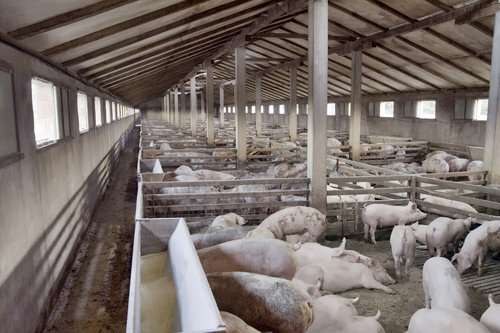
Below, we highlight some of the different management practices across some of the key swine producing countries, as detailed by the NPA.
Sow housing:
- The U.K. and Sweden has banned the use of sow stalls (gestation crates) since 1999.
- Most of the European Union allows farmers to use sows stalls for four weeks after breeding.
- Nine states in the U.S. have banned sow stalls, while the rest allow the use of the stalls for the sow’s 16 week gestation period.
- Canada currently allows farmers to use sow stalls. According to the Code of Practice, however, all new or renovated hog buildings must house sows in groups – farmers are able to use the stalls for up to five weeks. The code requires all hog producers to use group housing for their sows by 2024.
- Although Brazil allows farmers to use sow stalls, the two largest pork producers are either eliminating or have eliminated the use of sow stalls.
Farrowing crate:
- Canadian, Brazilian and U.S. producers can use farrowing crates in their swine operations.
- Sweden bans farmers from using farrowing crates, with the exception of case-by-case situations.
- In the U.K. and most of the E.U., producers may only use farrowing crates during the period from when the sow is seven days to farrowing up until weaning.
Outdoor-indoor systems:
- 40 per cent of sows in the U.K. live outdoors. Of the indoor sows, 90 per cent, along with 60 per cent of all finishing pigs, have stall bedding.
- Farmers in the rest of the E.U., the U.S., Canada and Brazil keep the majority of their pigs indoors with slatted floor systems.
- In Sweden, over 90 per cent of finishers and sows are kept indoors and on straw.
Antibiotic use for production purposes:
- In Canada, producers can import antibiotics without regulatory interference.
- In Brazil, producers commonly use antibiotic growth promotors in their operations.
- Since Jan. 2017, U.S. producers cannot use antibiotics that are significant to the medical sector for production purposes on their farms. (Producers can still use these antibiotics through prescription or veterinary feed directive, according to the U.S. Food and Drug Administration.)
- Sweden, Denmark, the U.K. and most of the E.U. banned the use of antibiotics for production purposes.
Tail docking:
- Canada, Brazil and the U.S. allow producers to tail dock their pigs. Canada and the U.S. recommend best practices for how producers should perform the act.
- In the U.K., some 70 per cent of pigs have docked tails.
- Almost all pigs in Denmark, Germany and Holland have docked tails.
- In Sweden, producers cannot tail dock their pigs.
- In the rest of the E.U., producers can dock a pig’s tail when there is evidence of tail biting. Producer, however, must show they have tried other measures to prevent and stop tail biting before docking tails. A veterinarian or trained individual must perform the procedure.
Farms.com has reached out to the Canadian Pork Council to discuss the influence other country’s welfare standards has on our own.