Crop is still dormant and may sustain less damage than actively growing plants
By Kaitlynn Anderson
Staff Reporter
Farms.com
After the recent weather events across Ontario, producers may be wondering how their wheat crop is holding up.
Unfortunately, “it’s too early to know the impact flooding may have on overall winter wheat production,” Bianca Jamieson, a spokesperson for the Ontario Ministry of Agriculture, Food and Rural Affairs, told Farms.com today.
At this time, however, the wheat is still dormant and overwintering, she said. In this state, crops tend “to sustain less damage from being underwater compared to plants that are actively growing in the spring or summer.”
However, fields that have been flooded for at least one week could see some damage.
As survival rates vary by variety, producers can find more information on their particular winter wheat variety at GoCereals.ca.
In the spring, farmers may have a better understanding of their crops’ health.
“We encourage growers to physically assess their stands in late April with the replant decision being made as late as possible in order to give the wheat time to grow,” Jamieson said.
Farmers should determine the plant population and assess the health of the plants to assist in this decision.
“Also, be sure to consider the planting date,” she said. “If the wheat was planted early, it has more yield potential.”
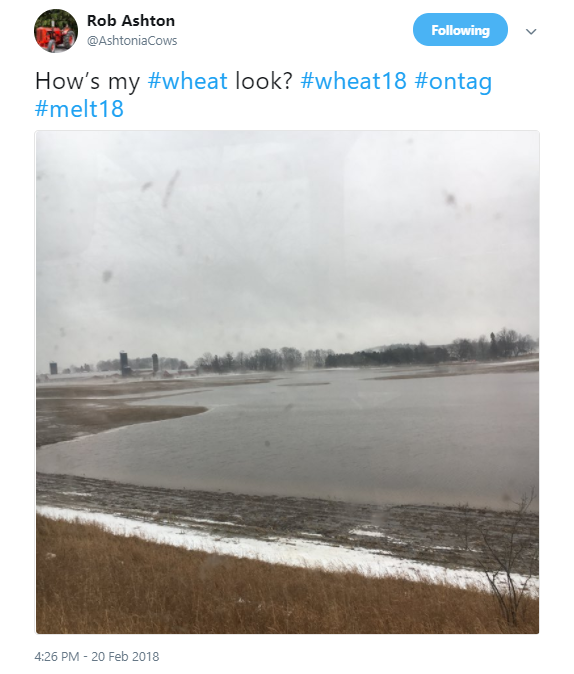
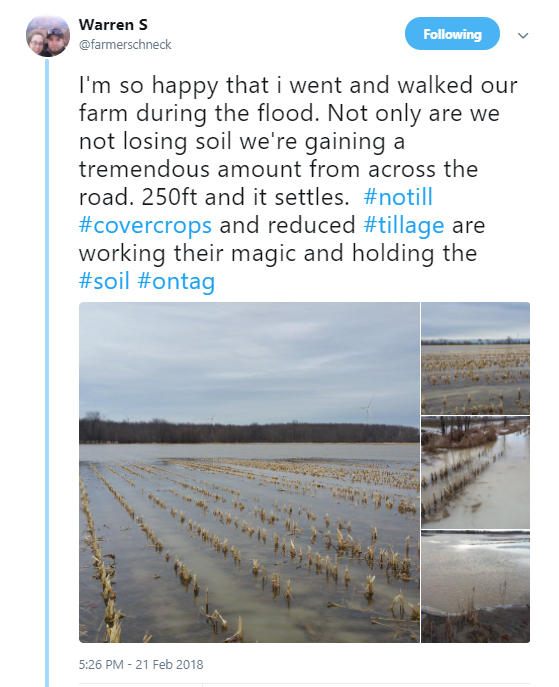
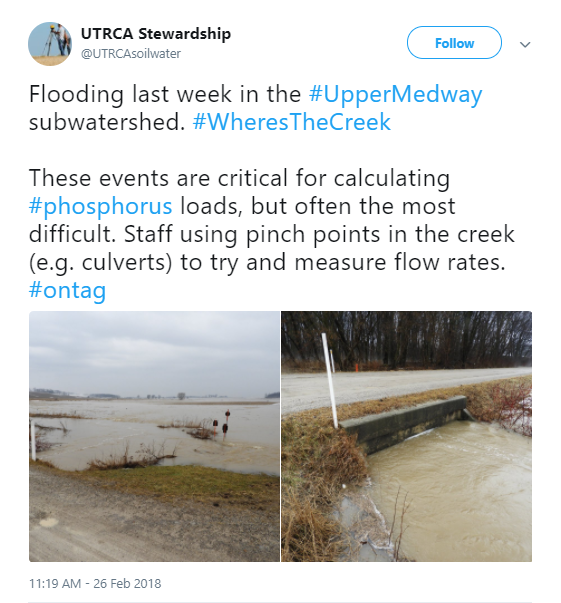
Some farmers have shared footage of the recent flooding:
Twitter
Twitter
Twitter