Manufactured between 1963 and 1972
IN THE SHOP with Rachel
By Rachel Gingell
Farms.com
The John Deere 4020 is one of the all-around fabulous tractors that gives John Deere a good name.
Ranking as one of the most popular tractors of its time, the JD 4020 is still at work today in North American fields. More than 180,000 tractors were manufactured between 1963 and 1972. The 4020 is the most well-known tractor in the New Generation series.
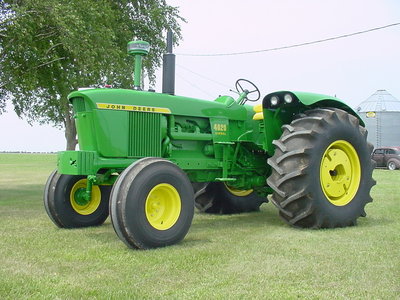
The vast majority of these tractors were diesel fuel, but the tractor was also manufactured in gasoline and LP gas versions. The gasoline version has a huge carburetor, greatly reducing the fuel efficiency of the tractor. You can get just as much horsepower for far less fuel by purchasing the diesel version of the tractor. Because so many (160,000+) of these tractors were diesel (compared to around 8,000 gasoline), you can assume that any JD 4020 you see for sale is a diesel - but check before you buy, just to be safe.
While the 4020 doesn't have any major issues, there are a few things you should look for when purchasing one of these tractors.
First, make sure the PTO is in good working condition.
Second, check the steering system.
Third, look at the front end. Wide front ends are popular - even ones that didn't come this way from the factory have often been replaced aftermarket. Whenever possible, purchase one with a factory front end rather than an aftermarket version. John Deere factory front ends are very heavy-duty and reliable. I haven’t seen an aftermarket version that quite matches up.
Finally, check for extra bonuses. It's usually worth paying a bit more for dual remote hydraulics. While a cab can make repairs a bit more complicated, even the basic cabs these tractors offer are a nice way to increase operator comfort.
This past week, I found a great deal on a 4020 John Deere that was too good to pass up. Next time you find a deal, consider making the 4020 a part of your tractor lineup too.