Farms.com Home   Ag Industry News

OMAFRA releases June 15 Field Crop Report

Soybeans remain in different stages

By Diego Flammini
Assistant Editor, North American Content
Farms.com

The latest Field Crop report released by OMAFRA says different crops across the province remain in different growth stages.

When it comes to corn, the report states most “is at the 6 or 7 leaf stage and progressing nicely.”

Corn fields are generally beyond the critical weed-free period and some dry areas are experiencing weed escapes due to lack of rainfall and herbicide activation.

For soybeans, the report says the crop is anywhere between the “still waiting to germinate (and) third trifoliate stage” in earliest planted fields.

Pests including seedcorn maggot, wireworm and millipedes are being reported, notably in areas where beans have remained unemerged.
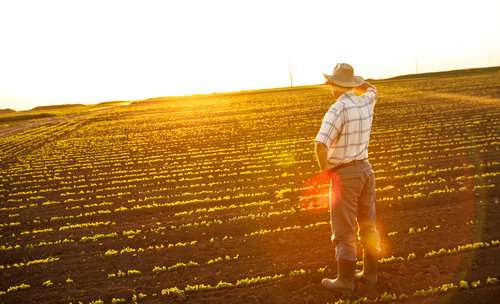
Farmer alone in field

Emergence on eroded knolls, dry, heavy-textured soils and areas of fields not planted into moisture is patchy and some replanting is occurring across Ontario.

OMAFRA says there’s still lots of weedy fields moving beyond the first trifoliate stage.

With respects to winter wheat, OMAFRA says the crop looks promising.

“Most of the acres have received fungicide for stripe rust and to prevent Fusarium head blight. The wheat has headed out a week to ten days earlier than usual, so harvest is also expected to be earlier.”

Binbrook and Cayuga have reported army worm and cereal leaf beetle has been reported in Eastern Ontario.


Trending Video

Evolution of Beef Cattle Farming

Video: Evolution of Beef Cattle Farming

The Clear Conversations podcast took to the road for a special episode recorded in Nashville during CattleCon, bringing listeners straight into the heart of the cattle industry. Host Tracy Sellers welcomed rancher Steve Wooten of Beatty Canyon Ranch in Colorado for a wide-ranging discussion that blended family history and sustainability, particularly as it relates to the future of beef production.

Sustainability emerged as a central theme of the conversation, a word that Wooten acknowledges can mean very different things depending on who you ask. For him, sustainability starts with the soil. Healthy soil produces healthy grass, which supports efficient cattle capable of producing year after year with minimal external inputs. It’s an approach that equally considers vegetation, animal efficiency, and long-term profitability.

That philosophy aligned naturally with Wooten’s involvement in the U.S. Roundtable for Sustainable Beef, where he served as a representative for the Colorado Cattlemen’s Association. The roundtable brings together the entire beef supply chain—from producers to retailers—along with universities, NGOs, and allied industries. Its goal is not regulation, Wooten emphasized, but collaboration, shared learning, and continuous improvement.