Farms.com Home   Ag Industry News

OMAFRA releases latest Field Crop Report

Report released on August 24

By Diego Flammini
Assistant Editor, North American Content
Farms.com

OMAFRA’s Field Crop Team released its latest Field Crop Report to give an update on field conditions and weather throughout Ontario.

“Rainfall across much of the province last week has brought renewed vigor to many of the crops,” the report says.

Despite dry weather resulting in some potential yield loss, the recent moisture could allow some crops to rebound.

“Hay and pasture fields have greened up considerably, suggesting a chance for a decent 2nd/3rd cut and getting livestock back on pasture,” the report said. “Corn and bean crops have responded to the rainfall as well.”
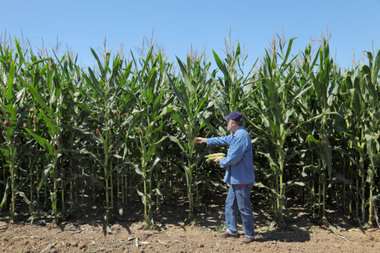
Farmer in corn field
Getty


Spring cereal harvest is wrapping up around the province. Some cereals are performing better than others.

“While winter wheat yields were generally above average for all classes, spring cereal yields are lower than average, particularly in central Ontario,” OMAFRA’s Field Crop team said in its report.

Producers beginning to harvest their dry edible beans may want to consider applying a pre-harvest herbicide to even up dry-down.

“For soybeans and edible beans, controlling escaped weeds will make harvest more efficient, can improve harvest quality and can provide better weed control in the following crop.”


Trending Video

Season 6, Episode 10: Defining Resiliency and the Research Driving Swine Health Forward

Video: Season 6, Episode 10: Defining Resiliency and the Research Driving Swine Health Forward

Genetic research and new technologies continue to influence the future of swine health and production efficiency. In this episode, we explore how research and technology are being used to support stronger, more resilient pigs, while also improving overall production outcomes. In this episode, we are joined by Dr. Jenelle Dunkelberger, geneticist with Topigs Norsvin, to discuss both routine and emerging strategies for improving piglet, pig, and sow livability. She outlines two primary approaches to enhancing resiliency: gene editing and traditional selective breeding. Continuing the resiliency conversation, we also hear from Dr. Lucina Galina, director of technical research projects at the Pig Improvement Company. She shares insights into ongoing gene-editing work focused on PRRS, detailing the pathway to success, regulatory and practical considerations, and the questions that still remain as the technology evolves. Together, these conversations provide a closer look at how research, genetics and innovation are shaping the future of swine health and livability.