Image shows a road grader performing fieldwork
By Diego Flammini
Assistant Editor, North American Content
Farms.com
Members of Ontario’s agricultural community are reprimanding the provincial Government after an image in a piece of provincial legislation showed sustainable agriculture being practiced with a piece of road maintenance equipment.
The graphic, showing what Ontario could look like in 2050, was featured in the province’s five-year climate change plan. The image includes electric cars and sustainable forestry.
It also shows a piece of equipment that resembles a road grader.
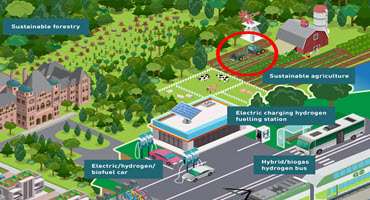
“Notice the road grader tilling the crops,” Justus Hickey, a Regina-based technical instructor with John Deere who’s originally from Bruce County, tweeted on Monday.
He finished his thoughts with “#NotAClue.”
There’s still a disconnect between what the non-farming community think farmers do and what they actually do, according to others involved with Ontario agriculture.
The image “is another example of (the) Ontario Government being out of touch with rural living,” tweeted Frank McNeely.
Other reactions to the image included “wow,” and “embarrassing.”
The image has since been edited and the tractor is no longer present.
Where does agriculture fit into the climate change plan?
The 86-page document outlines the provincial government’s plans to reduce emissions in Ontario.
And, when it comes to agriculture and the overall theme of sustainability, there are five goals in mind.
- Reducing emissions from waste and moving Ontario towards a circular economy,
- Increasing the understanding of how agricultural and natural lands emit and store carbon,
- Maximizing carbon storage from agriculture,
- Understanding and enhancing carbon storage in natural systems, and
- Providing environmental assessment updates to account for climate change.
Agriculture accounted for 6 per cent of Ontario emissions in 2013, according to the document. Transportation accounted for 35 per cent and industry accounted for 28 per cent.