Farms.com Home   Ag Industry News

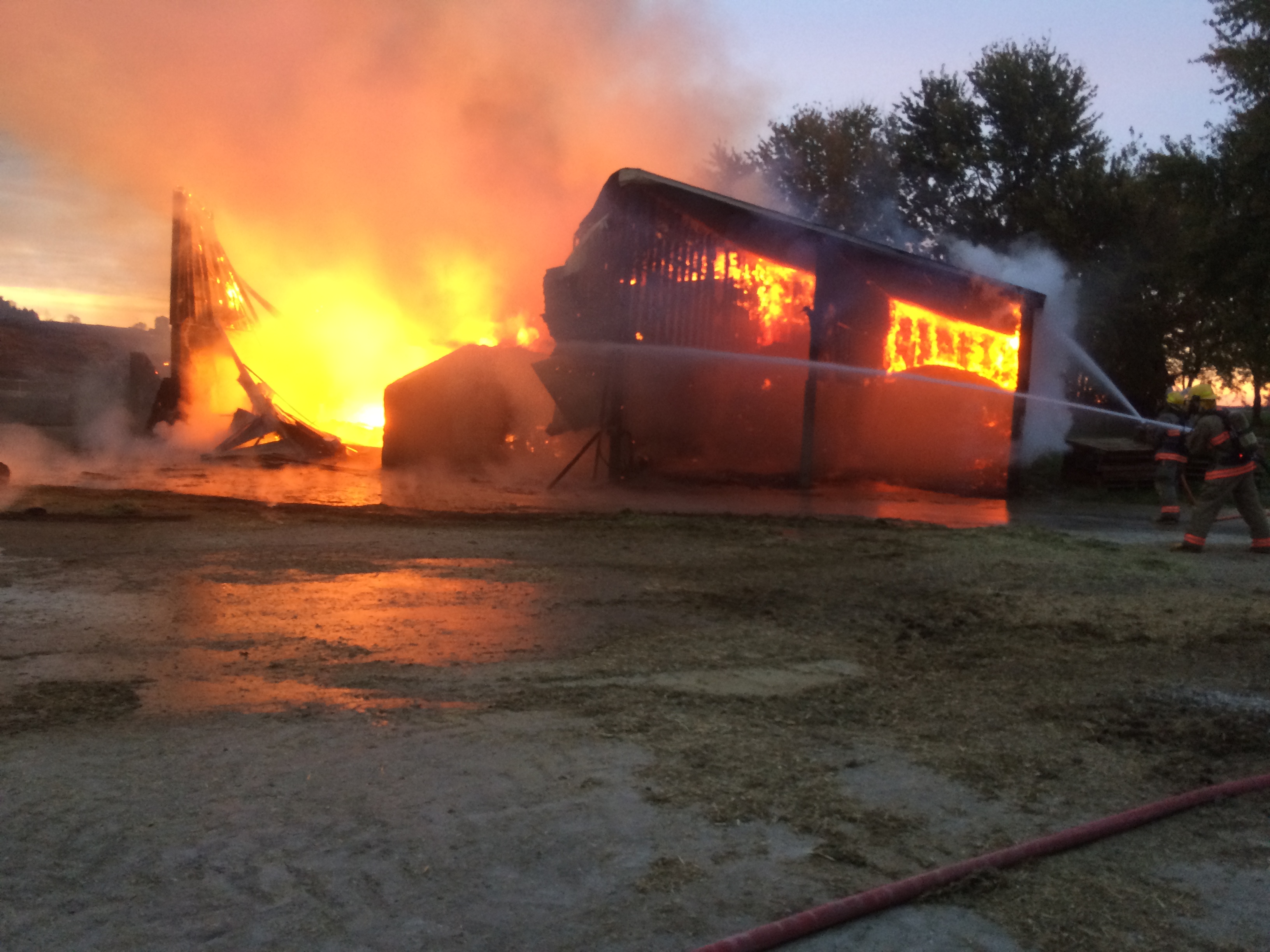
Oxford County fire destroys a barn, hay and straw

Oxford County fire destroys a barn, hay and straw

Fire began just after 7:00 a.m. yesterday morning

By Diego Flammini
News Reporter
Farms.com

An Oxford County farm family is trying to piece together how a recent barn fire started.

22-year-old Simon Visser, who farms with his brother and father, recalls his sibling being in the barn shortly before the fire broke out just after 7:00 a.m. on Monday.

“My brother was in there half an hour before mixing feed and there was no smoke or smell,” Simon told Farms.com today.

Once they saw smoke, the brothers ran into the barn, figuring dry bales of hay or straw were the source. But after removing the dry bales from the barn, they saw some wet hay was burnt and actually began to spark.

It was mere moments before flames completely engulfed the barn.

“I called 911 then ran over with some fire extinguishers to try controlling the fire,” Visser said. “Firefighters showed up about nine minutes after I called them. Once my fire extinguishers emptied, it took about 30 seconds for the whole thing to go up (in flames).”
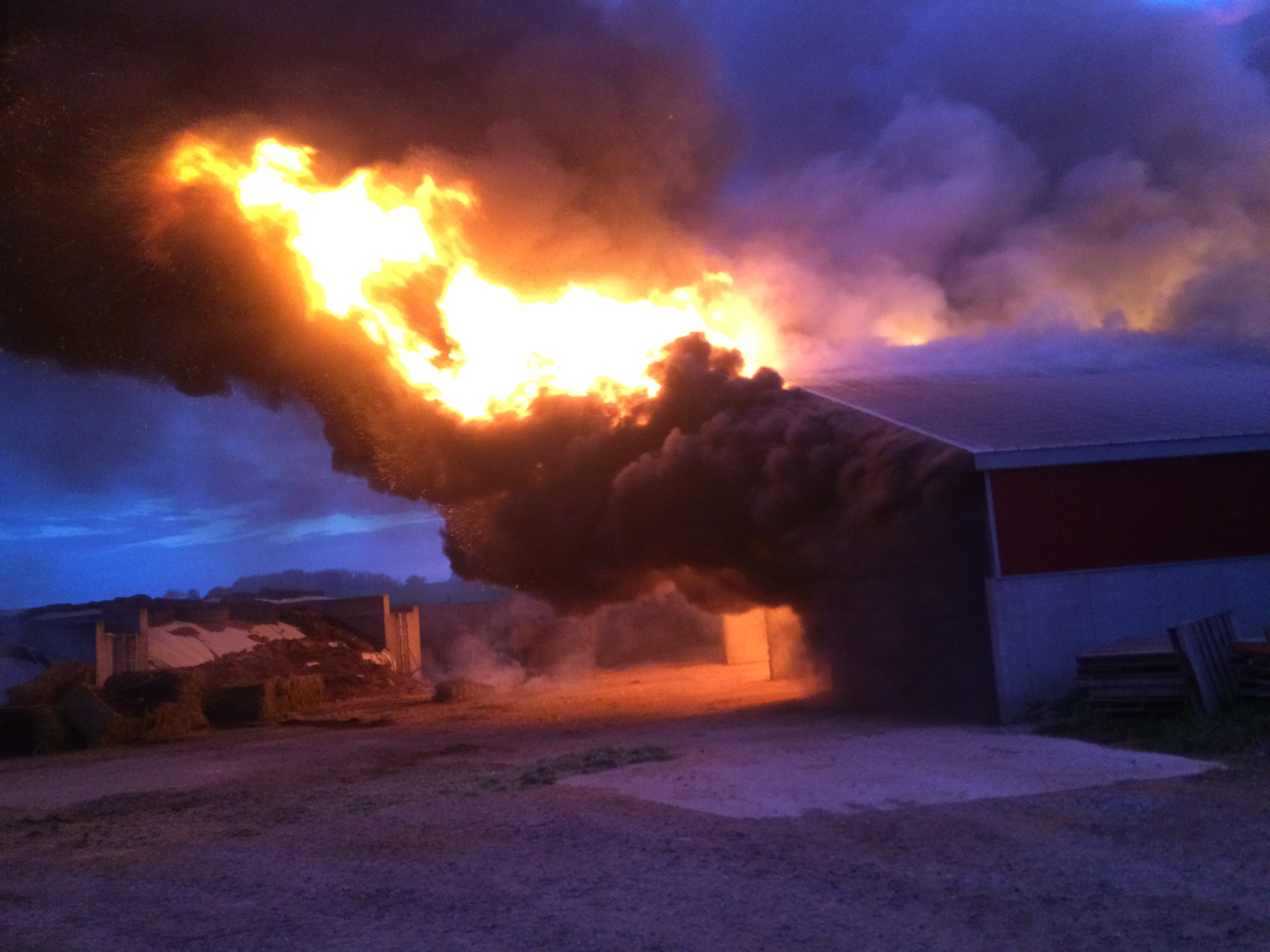
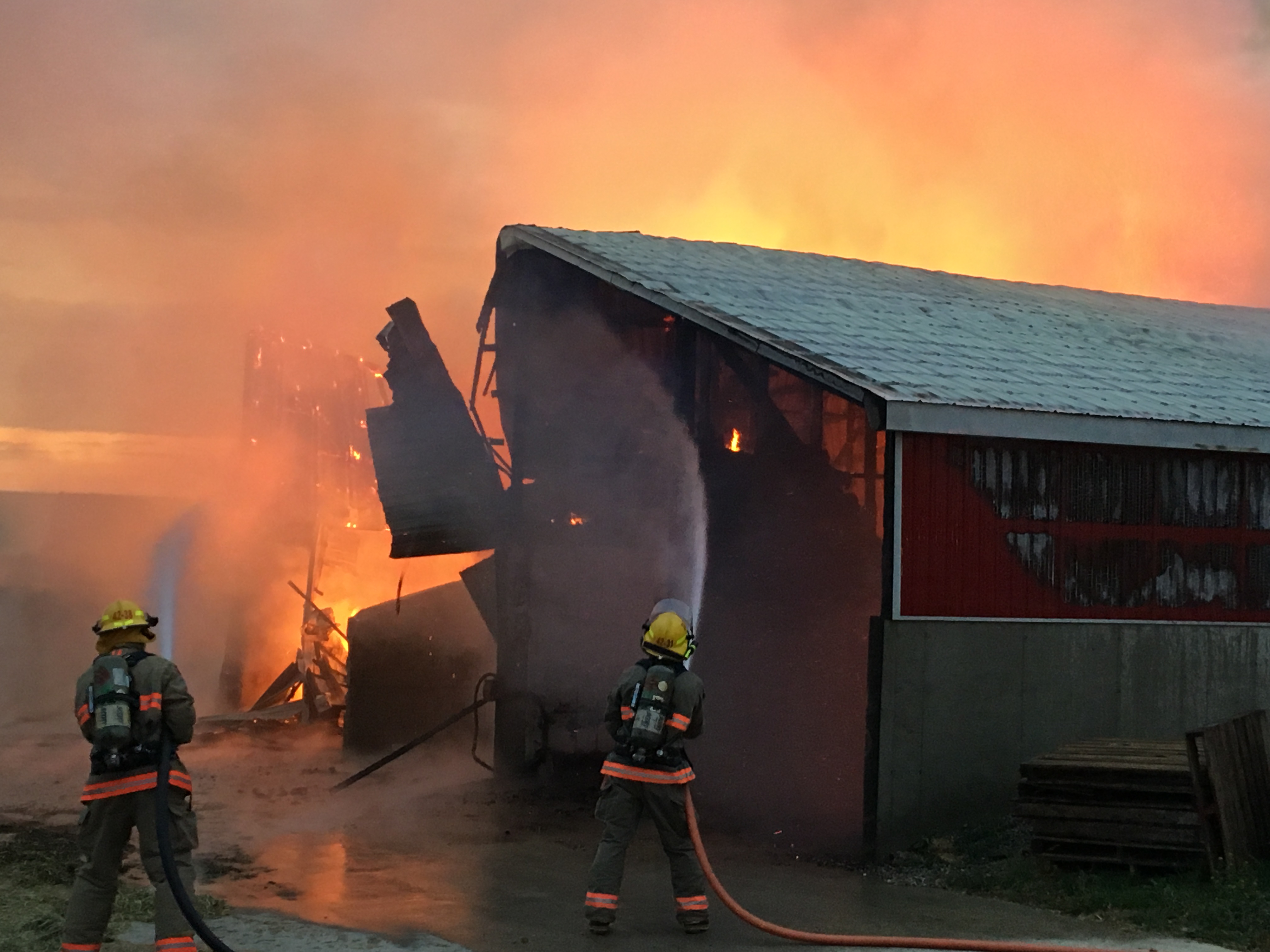


All photos courtesy of Simon Visser

Firefighters from multiple stations were able to control the fire and prevent it from spreading to other buildings, including the family’s home and a new dairy barn complete with robotic milkers. The fire destroyed a barn as well as bales of hay and straw.

“The situation could’ve been much worse,” he said. “Losing the feed obviously hurts but no people or livestock were injured, so at least that’s a positive.”


Trending Video

Evolution of Beef Cattle Farming

Video: Evolution of Beef Cattle Farming

The Clear Conversations podcast took to the road for a special episode recorded in Nashville during CattleCon, bringing listeners straight into the heart of the cattle industry. Host Tracy Sellers welcomed rancher Steve Wooten of Beatty Canyon Ranch in Colorado for a wide-ranging discussion that blended family history and sustainability, particularly as it relates to the future of beef production.

Sustainability emerged as a central theme of the conversation, a word that Wooten acknowledges can mean very different things depending on who you ask. For him, sustainability starts with the soil. Healthy soil produces healthy grass, which supports efficient cattle capable of producing year after year with minimal external inputs. It’s an approach that equally considers vegetation, animal efficiency, and long-term profitability.

That philosophy aligned naturally with Wooten’s involvement in the U.S. Roundtable for Sustainable Beef, where he served as a representative for the Colorado Cattlemen’s Association. The roundtable brings together the entire beef supply chain—from producers to retailers—along with universities, NGOs, and allied industries. Its goal is not regulation, Wooten emphasized, but collaboration, shared learning, and continuous improvement.