Film helps keep moisture close to the crops
By Diego Flammini
Assistant Editor, North American Content
Farms.com
When it comes to planting season, Mother Nature can simultaneously be a farmer’s best friend and worst enemy.
To combat the changing climate in Australia, some farmers have started using a degradable polymer film that’s as thick as human hair.
After the farmer plants their seeds, the film is mechanically buried at the edges which creates an environment similar to a greenhouse.
"The film is placed in such a way that the seed is able to germinate and grow, where the degradation of the film is timed to be weak at the time the plant has grown to the point where it is trying to break out – typically about 10cm,” Co-Operative Research Centre for Polymers (CRCP) CEO Ian Dagley told the Brisbane Times; CRCP developed the film.
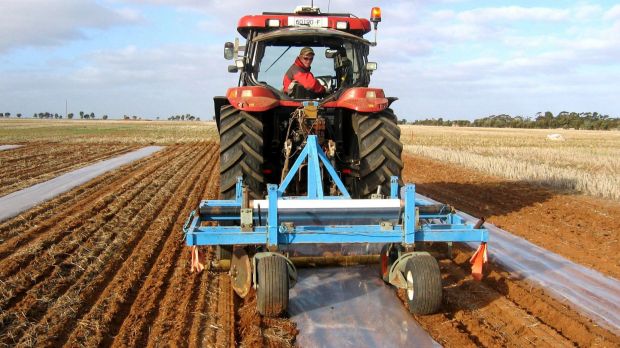
It can take approximately a month for the film to degrade enough for the plant to break through. During this time, the moisture within the soil stays close to the ground and is recycled back into it.
"You've trapped that moisture at the start of the season, so if you are going into a season that was very dry, the fact the crop was further developed early on might provide you with a benefit and potentially a better yield," Mr. Dagley said.
The film degrades underground so farmers can plow the fields without worrying about equipment getting caught on the film.
Trials have shown using the polymer film can lead to more uniform germination and earlier growth while not impacting soil quality or food safety.
Join the discussion and tell us if you would use a degradable polymer film in your farming operations.