Tips surrounding repair work on this tractor
IN THE SHOP with Rachel
By Rachel Gingell
Farms.com
The Ford 6000 Commander has a lot of horsepower and can be purchased for a rock-bottom price, but it is tricky to repair.
The Ford 6000 Commander was intended to replace the recalled Ford 6000. The 6000 was had a lot of mechanical problems and only produced from 1965-1967. After Ford recalled the tractor, it corrected the problems and re-released the model with a new designation. The Ford 6000 Commander is this re-release.
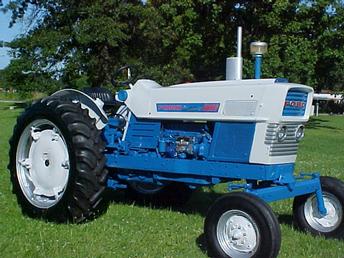
While Ford corrected the big mechanical issues with the Commander version of the Ford 6000, the tractor retained the Select-O-Speed transmission and the accumulator hydraulic system. Both of these features are difficult to repair.
The Select-O-Speed transmission was an early development of the hydrostatic transmission that allowed smooth shifting between gears during operation. Designers borrowed concepts from the automotive industry to make this transmission. The Select-o-Speed was a huge advance for the time.
Compared to modern transmissions, the shifting is not as smooth as you would expect. While this wouldn't be a big problem in a manual transmission (where you stop to change gears), it's an issue when you are still rolling along.
More significantly, the Select-O-Speed transmission very difficult to repair. When it breaks, the shrapnel is spread throughout the entire transmission. Each separate clutch pack must be replaced, and the valves that hold these clutch packs in place are tricky to install.
A second repair difficulty with the Ford 6000 Commander is the accumulator hydraulic system. The tractor's hydraulic system is equipped with a pressurized tank. This tank builds up to 1500 psi. At the touch of a button, the farmer can lift an implement out of even the most sticky soil, making the turn-around at the end of a row quick and efficient.
If you are repairing the hydraulic system on a 6000 Commander, be very careful! It is very important that you safely bleed off the pressure in a controlled way before beginning work on the system. Carefully inspect your hydraulic lines and hoses, and replace them at the first sign of wear. If you are not careful with maintenance, it could result in injury. While I’m a big fan of making repairs yourself, this one might be worth turning over to a qualified professional mechanic.