This tractor is iconic, collectible, and a tinkerer’s dream
IN THE SHOP with Rachel
By Rachel Gingell
Farms.com
The John Deere 720 was produced at the height of John Deere’s two-cylinder dominance. These beautiful tractors featured reliable, strong two-cylinder engines in a full range of fuels: gasoline, LP, all-fuel, and diesel. These tractors were incredibly popular, with more than 20,000 tractors sweeping across North America in just two years of production (1956 to 1958).
Today, we’ll focus on the diesel version of this iconic American tractor and its innovative pony motor design. In 1956, John Deere didn’t have an electric start ready for use in its diesel tractors (although the company was working hard to make this available soon). The JD 720 Diesel relied on a starting system John Deere used in their other two-cylinder diesel tractors: an auxiliary engine affectionately known as the pony motor.
The pony motor is a small gasoline engine nestled up under the dash. The operator would start this little gas engine and use it to warm the big diesel engine. When the engine was warm enough, the operator started the diesel engine and turned off the gasoline engine. It’s an innovative design that was top-of-the-heap in its day.
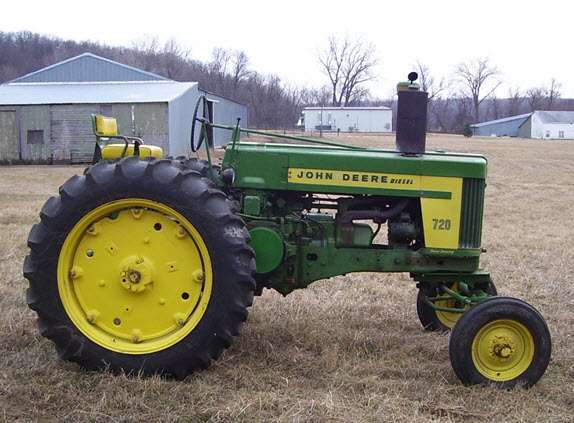
John Deere 720 diesel
Photo:TractorData.com
There are a lot of advantages to a pony motor. Besides the collectability (which is huge!), this design really shines in cold weather.
Collectors love these tractors because they give dedicated mechanics a chance to show off their skills. Many mechanics have a clear preference for diesel or gasoline engines, but a tractor with a pony motor demands skill in both. People who had (or very much wanted!) these tractors back when they were new are crazy about them now.
In 1958, the electric start became an option for the 720 Diesel.
It’s possible to convert a 720 Diesel with a pony motor to an electric start. This is a smart move if you’re planning on daily use – especially if you tend towards a lot of stop-and-go use, since the pony motor routine takes a little while to get going.
Parts can be hard to find for the little pony motors, so if you take one out to do a conversion, be kind and pass it along to a collector friend. (Don’t have a collector friend? Offer a collector a free pony motor and you’ll make a friend!)