Infusion of government money could equal $30 million
By Diego Flammini, Farms.com
Huanglongbing (HLB), also known as citrus greening, is a disease that can have substantial economic impact on the citrus industry if not combatted.
How substantial?
Researchers at the University of Florida estimated citrus greening was responsible for the loss of $4.5 billion and over 8,200 jobs between 2006 and 2011.
The United States Department of Agriculture (USDA) is taking a stand and fighting back.
US Agriculture Secretary Tom Vilsack announced $30 million in government funding to fight the disease.
The funds will be put into 22 projects – some with short-term goals, other with long-term research capabilities. Some projects are being funded through the HLB Multiagency Coordination Group and others by the Specialty Crop Research Initiative Citrus Disease Research and Education (CDRE) program made possible by the 2014 Farm Bill.
"Our HLB Multi-Agency Coordination Group has worked closely with the citrus industry to select and fund projects that we think will make a real difference for growers against HLB," said Vilsack in a release. "Funding these projects through cooperative agreements puts us one step closer to putting real tools to fight this disease into the hands of citrus growers." Vilsack continued, "Through the CDRE research we are announcing today, we are also investing in long-term solutions to diseases that threaten the long-term survival of the citrus industry."
The projects will differ in their specific areas of study. Some will try to increase early detection of HLB and some will look to eliminate the Asian citrus psyllid, a carrier of HLB. They’ll be carried out by the University of California, University of Florida, and Kansas State University.
Trees showing symptoms of HLB will show yellowed leaves, lopsided fruit, excessive fruit drop and in some cases cause the entire tree to yellow.
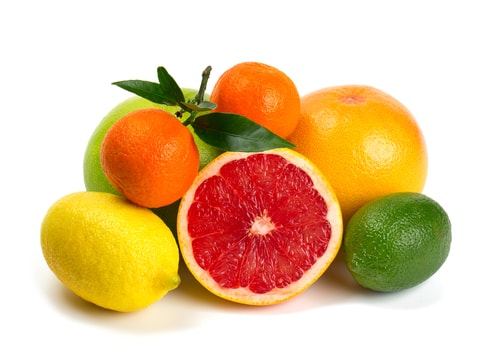
Various citrus fruits