By Tom Peters and Jared Goplen
Small grain harvest is nearing completion in many areas of Minnesota. Some small grain fields have broadleaf and grass weed escapes, while others have weeds hiding under the small grain canopy ready to grow following harvest (Images 1 & 2). Due to the droughty conditions in much of Minnesota this year, some small grains did not out-compete broadleaf weeds in 2021.
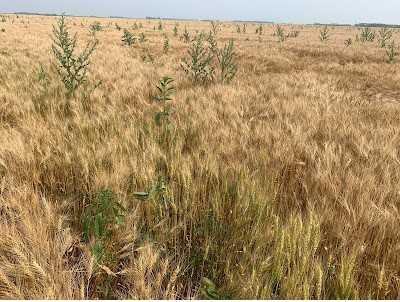
Image 1. Waterhemp, kochia and common lambsquarters
escapes in wheat
Tillage
We suggest you WAIT with tilling fields until after harvesting small grains. Dry soils will make tillage difficult and leave the soil more vulnerable to wind and water erosion. Moreover, insects and rodents forage on crop and weed seeds, which are a source for energy. University research reports greater than 5% per day loss and total losses ranging between 20% to 90% when weed seeds remain on the soil surface. Tillage after harvest greatly reduces predation since predators prefer not to dig for seeds.
Chemical control
We suggest waiting ten to fourteen days or until waterhemp or kochia is approximately 4-inches tall (Image 2).
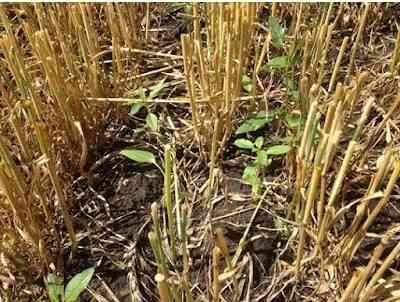
Image 2. Waterhemp regrowth after wheat harvest.
We know that glyphosate alone does not provide control of glyphosate resistant waterhemp or kochia. Field research to evaluate waterhemp control from mixtures with glyphosate was conducted in August and September of 2020 in wheat stubble (Peters and Lystad, 2021).
We observed 90% waterhemp control from Roundup PowerMax and Sharpen (saflufenacil) at 32 + 1 fl oz/A with Prefer 90 NIS at 0.25 % v/v plus N-Pak AMS at 2.5% v/v, 6 days after treatment (Table 1). At 22 days after treatment, there was no statistical difference between Roundup mixtures with Sharpen or Roundup and 2,4-D at 64 fl oz/A with Prefer 90 NIS at 0.25 % v/v plus N-Pak AMS at 2.5% v/v. Please be aware of crop rotation restrictions! Sharpen has a 4-month crop rotation restriction between application and sugarbeet planting - total months when soils are unfrozen. Sharpen is degraded in soil by microbes.
Table 1. Percent control 6 and 22 days after treatment (DAT) with various herbicides at Hickson, ND in a 2020 experimenta.
| Treatment | Rate | 6 DAT | 22 DAT |
|---|
| | fl oz/A | % | % |
| PowerMax | 32 | 26 c | 28 d |
| PowerMax/PowerMax | 32/32 | 33 c | 50 c |
| 2,4-D amine+PowerMax | 64+32 | 64 b | 88 ab |
| Sharpen+PowerMaxb | 1+32 | 90 a | 98 a |
| Sharpen+Valor+PowerMaxc | 1+1+32 | 99 a | 98 a |
| P-value | | 0.0001 | 0.0001 |
aHickson, ND, 2020.
b4-month rotation restriction to sugarbeet (unfrozen ground)
c4-month restriction and tillage to sugarbeet
Soil moisture, especially in the surface layer, is lacking in 2021 due to our drought conditions. Thus, it is not clear how much microbial activity might be occurring in soils. We believe Sharpen for fall broadleaf control might be a risky proposition, especially in fields to be planted to sunflower, drybean, sugarbeet, and potato in spring 2022. Therefore, Roundup PowerMax plus 2,4-D probably is a better option for waterhemp and kochia control following wheat harvest.
Gramoxone (paraquat) was not an entry in the 2020 experiment but may be an alternative to programs with crop rotation restrictions. Apply Gramoxone SL at 1.3 pt/A (3 lb gallon formulation) or 2 pt/A (2 lb gallon formulation) with non-ionic surfactant at 2 pt per acre in at least 15 gpa water carrier when broadleaf weeds are less than 4- to 6-inch tall. We observed improved control of broadleaves greater than 6-inch tall when 2,4-D is mixed with paraquat. We have also observed improved control from early evening application as there is some paraquat translocation in plants from late afternoon applications. Finally, please be respectful of neighbors’ sensitive crops especially when conditions are breezy.
Check herbicide labels if planning a cover crop
If you have plans to seed a cover crop this summer or fall, be sure to double check any herbicide labels for rotational intervals that may jeopardize establishment. Adjust either your chemical control or cover crop species to ensure compatibility.
Source : umn.edu