Growing cover crops under grapevines in vineyards can reduce erosion, enhance soil health, reduce herbicide use and improve water quality, according to a team of Penn State researchers, who suggest that growers can promote improved sustainability in production as part of a marketing strategy that may result in consumers being willing to pay more for wine.
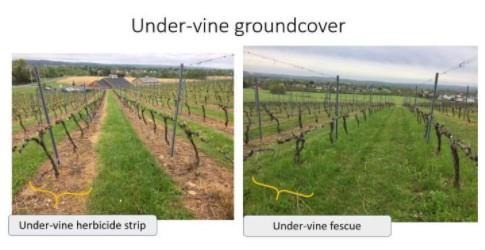
Excessive precipitation events have greatly increased in frequency and severity in some grape-growing regions, including the U.S. Northeast. The researchers demonstrated that either natural or seeded “under-vine vegetation” can help mitigate many of the problems associated with excessive precipitation.
"With so many wineries not only in Pennsylvania but throughout the country vying for consumer dollars, emphasizing sustainability is one way to differentiate themselves from competitors," said researcher Kathy Kelley, professor of horticultural marketing and business management. "We know that Gen Z and millennial consumers, especially, have a profound interest in sustainability and are very environmentally conscious."
A large percentage of both groups—and many older consumers, too—will respond favorably to winery marketing that emphasizes the sustainability of their operations, she added.
"But in today's world, sustainability can mean almost anything, and we're seeing a consumer group that wants to be educated and wants to know exactly what is going on with sustainable wine production," Kelley said. "So, being descriptive about what it actually means to include cover crops in a vineyard is a way to be attractive to them."
Cover crops in vineyards are increasingly relevant, contends another member of the wine and grape team in the College of Agricultural Sciences, Michela Centinari, associate professor of viticulture. She pointed out that excessive precipitation events have greatly increased in frequency and severity in some grape-growing regions, including the U.S. Northeast, due to climate change.