Farms.com Home   News

Cristobal Rain Dominates First Half of June 2020

By Pam Knox
 
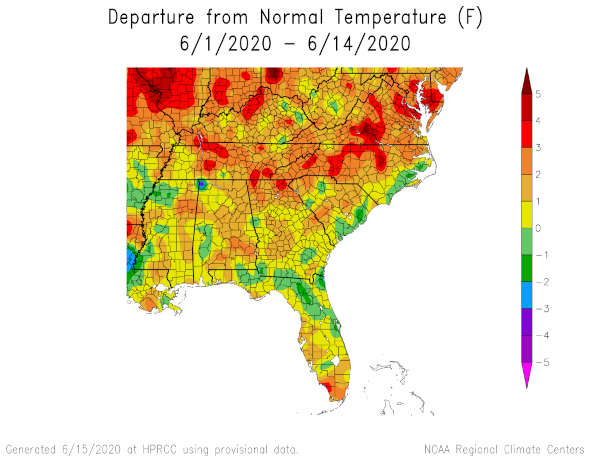
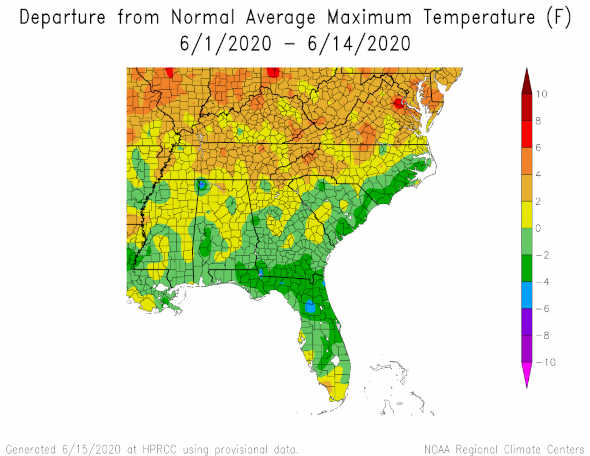
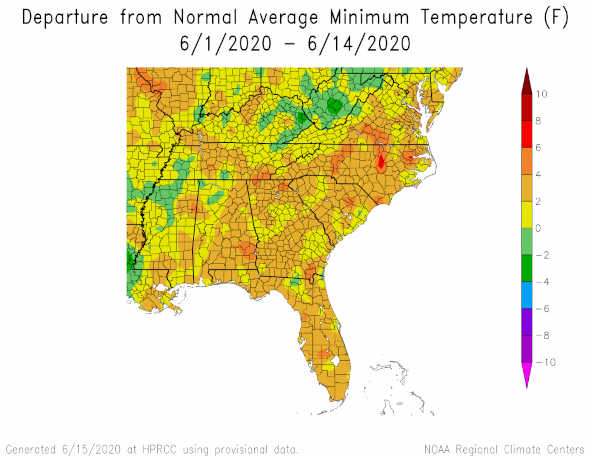
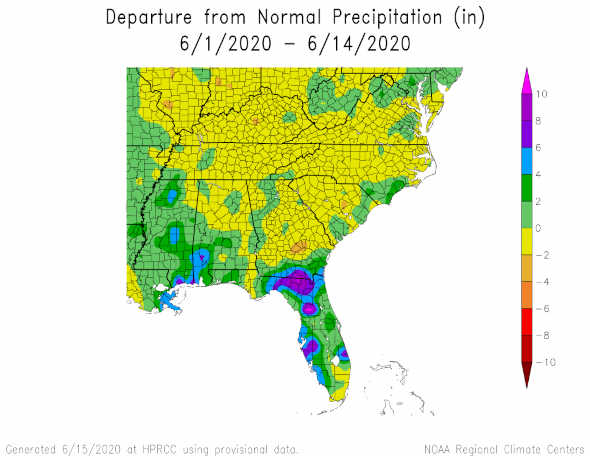
Now that we are halfway through June, 2020, let’s take a look at the climate for the month so far. Precipitation is quite variable and most places are drier than normal. The exception is along the Gulf Coast and in southern Georgia and Alabama and in Florida due to the rain that fell as TS Cristobal was approaching the Louisiana coast. Temperatures across the region were mostly above normal for the month so far, with the coolest areas in the same regions that got the most rain. That was due at least in part to more cloud cover there, although the rain certainly also caused evaporative cooling. It is interesting to note that nighttime minimum temperatures were warmer than normal across the region, which is what we expect due to long-term trends, and it was the daytime high temperatures that were mostly cooler than normal in the rainiest areas. So from this we can see that tropical storms affect not only precipitation, but also regional and local temperature patterns. Fortunately, the tropics are not active right now, so we don’t expect much more impact in the next couple of weeks, but watch for increased activity in August as the peak of the season gets closer.


Source : uga.edu

Trending Video

Sclerotinia and Lygus in Seed Canola: Field Update with George Lubberts, CCA | Enchant, Alberta

Video: Sclerotinia and Lygus in Seed Canola: Field Update with George Lubberts, CCA | Enchant, Alberta

Join Certified Crop Advisor George Lubberts for this Prairie Certified Crop Advisor (Prairie CCA) field update from Enchant, Alberta. In this 12th video of the series, George takes us into a seed canola field where the male rows have been removed and the female plants are filling pods. This video was taken in the third week of August 2025.

George discusses the early signs of sclerotinia stem rot, explaining how infection begins in the stem, impacts pod development, and leads to premature ripening. He also shares insights on lygus bug management, including timing of spray applications to minimize feeding damage and maintain seed size and quality.

With cool, damp summer conditions, George notes that while disease pressure is present, overall field health remains good. The crop is just beginning to show early seed colour change, signaling progress toward maturity.

Topics Covered:

•Sclerotinia stem rot identification and impact

•Managing lygus bugs in seed canola

•Crop stage and seed colour change observations

•Timing insecticide sprays for optimal protection

•Insights from a CCA field perspective in southern Alberta