By Mary Hightower
The University of Arkansas System Division of Agriculture is accepting samples to test for herbicide resistance in barnyardgrass and other weed species in rice.
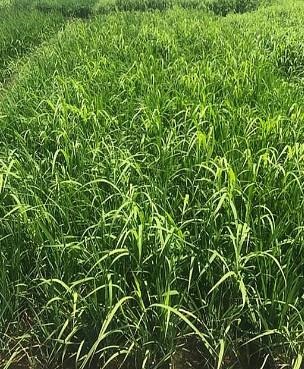
BARNYARDGRASS — Herbicide-resistant barnyardsgrass is Public Enemy No. 1 for Arkansas rice growers. This weed is among the targets for a team of researchers which landed a funding grant from NIFA in October 2020. (U of A System Division of Agriculture photo by Tommy Butts)
Forms are available from your county extension office. (Find your county office at uaex.uada.edu/counties). The deadline to submit samples is Nov. 1.
“This screening will give us some idea if a producer has been using the wrong herbicide,” said Jason Norsworthy, professor and weed scientist for the Division of Agriculture.
To submit samples:
- Collect approximately 25 mature barnyardgrass seedheads and place in a paper bag.
- If other weed species are being collected for screening, make sure there are ample seeds available. Use a separate bag for each weed species.
- Send one sample per species per field.
“If an individual has more than one field where herbicide failure occurred, they are welcome to send multiple samples,” Norsworthy said. “The sample identification form that accompanies every sample will ask for GPS coordinates and a field name in addition to other information.”
Norsworthy said it’s important to collect mature samples “if we’re not able to germinate them, the tests won’t work.”
The screenings will look at seven herbicides: glyphosate, clomazone, propanil, quinclorac, imazethapyr, cyhalofop, and florpyrauxifen-benzyl.
Norsworthy said results will be returned to county agents in late February or first week of March and those who submitted samples will be notified by the county agent.
“This type of testing has been ongoing since the early 1990s following the confirmation of propanil-resistant barnyardgrass,” he said. “The number of samples submitted for screening has increased in recent years. In the last four years, approximately 150 samples are submitted for evaluation each fall.”
The testing is free and funded by the Arkansas Rice Research and Promotion Board.
Source : uada.edu