By Andy Michel and Mark Sulc et.al
Potato leafhopper (PLH) adults arrived in Ohio during the last week of June and first week of July. Since then, the eggs have hatched and we are now seeing late stage nymphs and adults infesting alfalfa fields. A few fields are showing the typical “hopperburn”, which is a triangular yellowing from the center of the leaf to the leaf margin. The more mature the crop of alfalfa is since the last cutting, the more the hopperburn symptoms will be showing. Hopperburn will also become more pronounced in areas of the state that are short on rain or are predicted to become drier because the alfalfa will not be able to outgrow the feeding activity of PLH. Scouting now and making appropriate management decisions based on the scouting can help avoid serious damage to the crop.
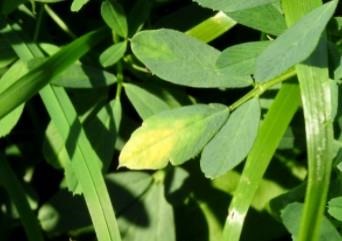
Hopperburn on alfalfa.
Sweep netting is the best way to scout for PLH. If alfalfa is more than seven days from a cut and plants are under normal stress, a good rule of thumb for an action threshold for treatment is when the number of PLH (nymphs+adults) in a 10-sweep set is equal to or greater than the height of the alfalfa. For example, if the alfalfa is 10 inches tall, and the average number of PLH per sample is 10 or higher, treatment is warranted. If the average is nine or lower, the grower should come back within a few days to see if the population is continuing to increase (treatment warranted), staying the same (come back again in a few days), or declining (treatment not warranted). Vigorous alfalfa can tolerate higher numbers, and stressed alfalfa can tolerate fewer, so you may need to adjust your action threshold based on the condition of the alfalfa. Keep in mind that an early cutting may also be an option.
Source : osu.edu