By Chris Penrose
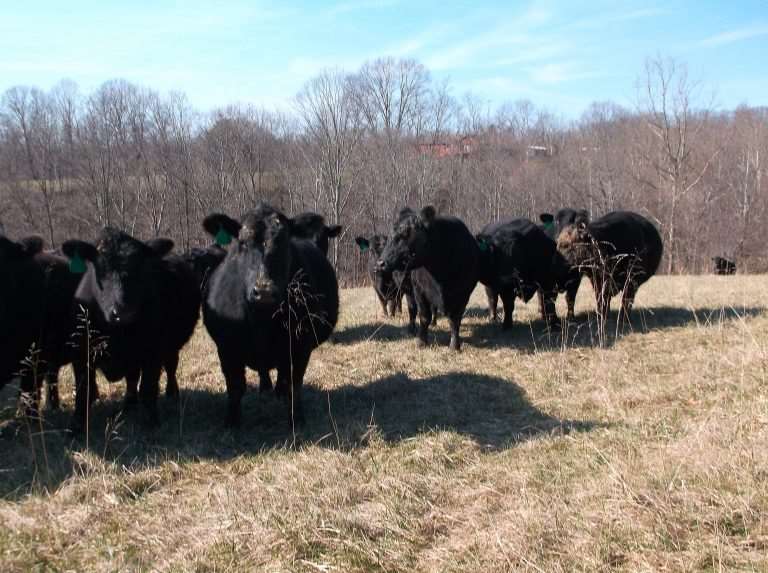
March 3rd was the last day I fed my spring calving cows hay. You may have read in previous articles (2/26/ 2014, 3/7/2012, 3/1/2006) some of the advantages of stockpiling fescue and grazing it during calving season. This includes a thick sod to calve on, no mud, and no hay to feed. I do have to admit that I feed a couple pounds of whole shelled corn right on the ground to give the cows a little more energy, but every year I see a rapid improvement in body condition when they go out on stockpiled fescue. When we moved the cows to the pasture on Saturday (March 4th), I noticed that there was more new growth for early March then I have seen in over thirty years, so the quality of the grass is much better. I am seeing a nice mix of new growth fescue, some up to eight inches tall, mixed with some aftermath from last year. In fact, I think some of the green grass growing is some that was green all winter. I also think it is time to start feeding a high magnesium mineral now as well. Even if you are feeding hay, I am seeing a lot more cows picking at or grazing new growth.
In my area, new grass growth seems to be at least two weeks ahead of schedule and it may be time to plan accordingly. I can think of two options when we start grazing. One is to rapidly graze paddocks in a fast rotation, and the other is to “set stock” or give them access to all of the pastures early, then start rotating with the rapid growth that will occur in April.
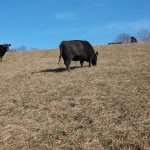
Whenever you generally start grazing, plan on it being a little early this year and do not miss out on the opportunity to do so. If fence needs to be repaired, watergates need to be fixed, or removing the fallen ash tree off the fence, we may not have as much time as we thought, because it is about time to start grazing.
Source:osu.edu