Body condition scoring is an easy trait to record and is strongly correlated to cow productivity.
But don’t overlook the value of scoring your cattle multiple times throughout the year. A new four-page publication from the Iowa Beef Center at Iowa State University has the information beef cattle producers need.
The publication, Evaluating Body Condition of Beef Cows In Winter, IBC 0140, is available as a free download on the Iowa State Extension Store.
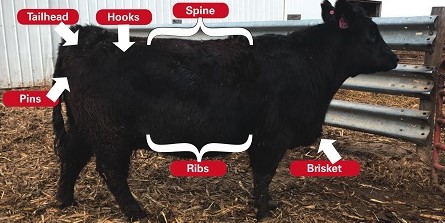
Key areas for palpating cows when body condition scoring.
Beth Reynolds, IBC extension program specialist with Iowa State University Extension and Outreach, is one of the authors. She said utilizing a BCS helps producers consistently evaluate the nutritional status of their cow herd, which is powerful knowledge when sourcing feed on a budget.
“This fact sheet walks the user through the importance of body condition and the value of assigning a BCS to animals in your herd frequently,” she said. “It also explains the key differences to note when calling a BCS in the winter compared to the summer months.”
With the large amount of variability seen in winter weather patterns throughout the United States, it is imperative to address the body condition of cows routinely throughout the year, according to the publication.
Despite its usefulness, body condition scoring during winter has often been overlooked or undervalued.
Source : iastate.edu