By Jeff Mulhollem
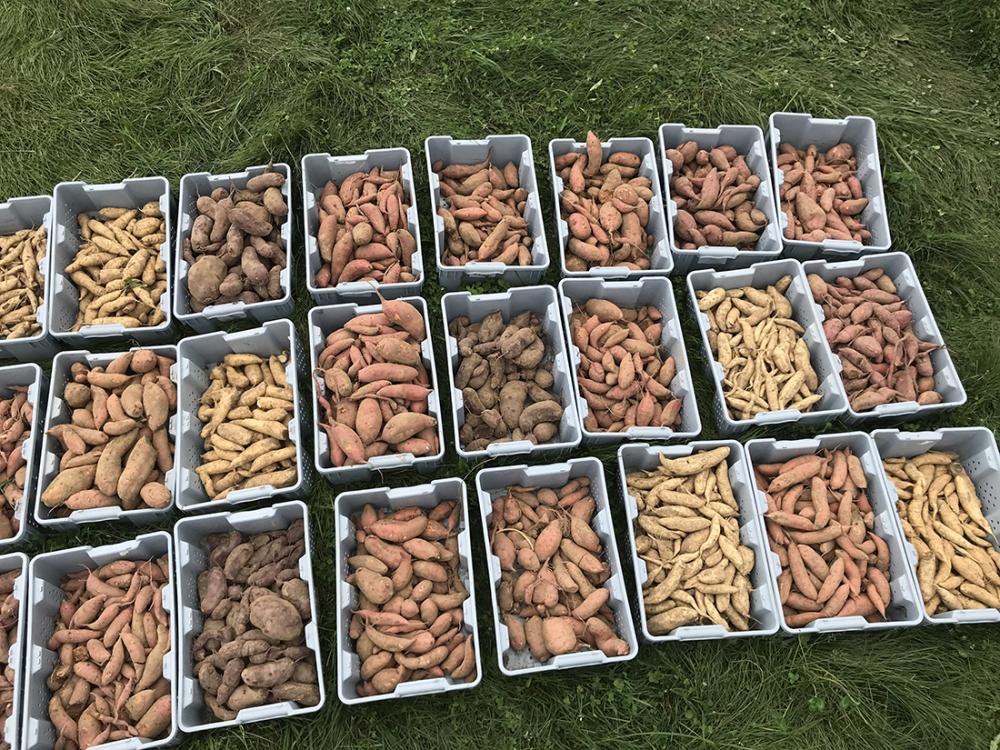
A researcher in Penn State’s College of Agricultural Sciences has received a $650,000 grant from the U.S. Department of Agriculture to lead a multi-university team in a study focused on the anatomical, physiological and genetic factors underlying phosphorus-stress-induced reprogramming of storage root architecture.
The storage root is a specialized underground organ that undergoes modifications during its development to store nutrients. The researchers said the study is important because many storage roots are used as food, and several that accumulate high levels of carbohydrates — such as sweet potato and cassava — are staple crops important for food security.
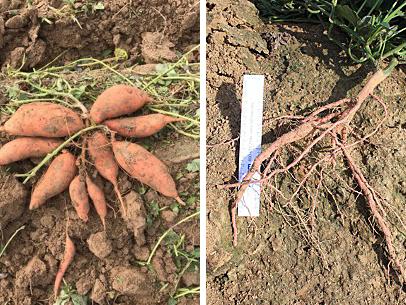
Luis Duque, assistant research professor in storage root physiology, will use the four-year funding, coming through USDA’s National Institute of Food and Agriculture, to spearhead an effort to understand the mechanisms and genetic structure responsible for the reduced secondary root growth of developing roots in sweet potato.
“It's crucial to define and understand mechanisms that enhance nutrient stress tolerance to keep American agriculture competitive, alleviate future famines and adapt to climate change,” he said. “Understanding root secondary growth under soil nutrient stress could be a game-changer for improving the nutrient stress tolerance of root and tuber crops.”
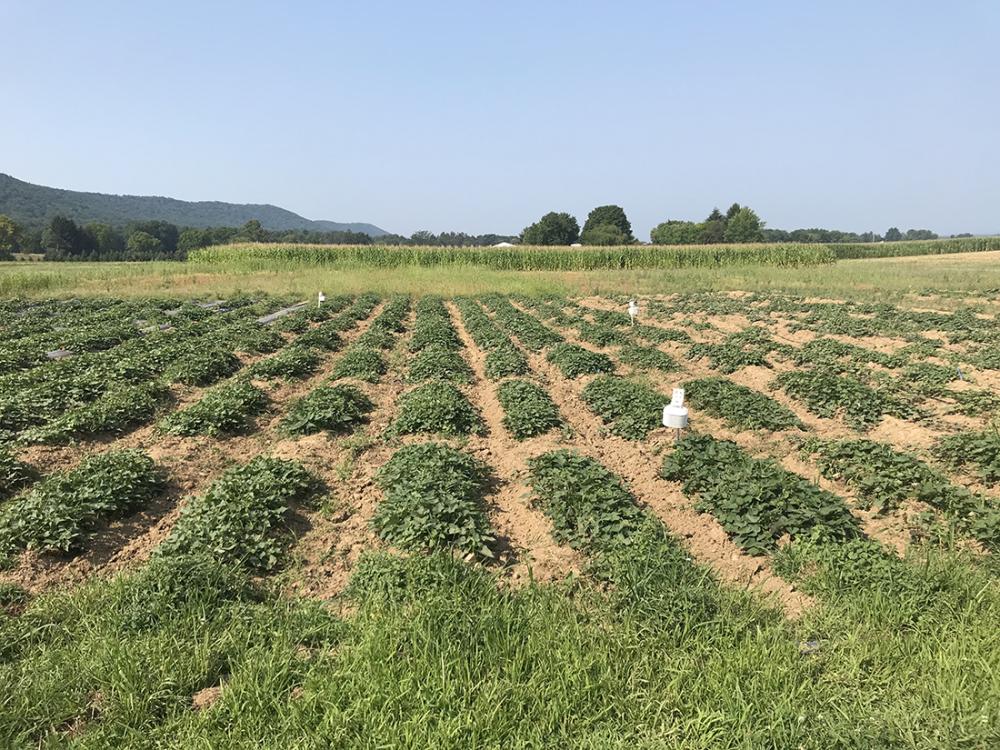
Although this project focuses on sweet potatoes, Duque noted, the findings could be applied to other crops such as cassava, potatoes, sugar beets and carrots. Therefore, he explained, this mechanism may have broad utility in agriculture.
“By addressing novel scientific issues relevant to human welfare, this project sheds light on the importance of root formation under nutrient stress and offers a new perspective on how to improve crop productivity,” Duque said.
Also leading the research team are Arthur Villordon, professor, Louisiana State University AgCenter Sweet Potato Research, and Bode Olukolu, assistant professor, University of Tennessee-Knoxville. Collaborating on the project are G. Craig Yencho, distinguished professor, North Carolina State University, and Jonathan Lynch, distinguished professor, Penn State.
Source : psu.edu