By Gino Lorenzoni
Agent:
the parasite Histomonas meleagridis is the causative agent of histomoniasis commonly known as blackhead disease. All gallinaceous birds are susceptible to the infection although turkeys are the most susceptible species.
The cecal worm Heterakis gallinarum is the intermediate host of H. meleagridis. Heterakis is a fairly prevalent worm in chicken production, reason why it is always recommended not to raise chickens and turkeys in the same premises.
Histomonas meleagridis is not a resistant organism; it needs the protection that is conferred by the presence of the cecal worm Heterakis or from earthworms. The cecal worm is common in chickens but not common in turkeys. It is believed that outbreaks in turkeys originate from the accidental introduction of the worm eggs into the premises. This can happen by means of contaminated equipment, contaminated clothes or shoes, or other vectors as flies and beetles. Birds become infected by consuming the worm eggs from the feed, water, litter, grass, or a contaminated insect. Once the birds are contaminated the histomonas can pass to other birds by direct contact.
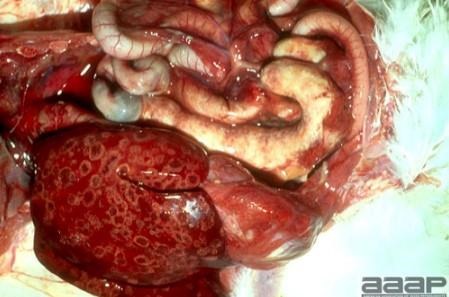
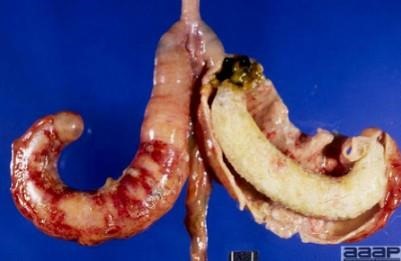
Infected turkeys will look depressed and will excrete sulfur yellow fecal matter. At the necropsy, their ceca may be engorged with their walls inflamed and may present cecal cores (hardened material filling the ceca). The liver may present characteristically rounded and depressed lesions. Other organs may also present lesions (lungs, pancreas, kidneys).
Intervention strategies:
Control of the cecal worms. Fenbendazole is approved for the treatment of Heterakis in Turkeys.
Avoid raising turkeys on land that has been used to raise chickens. Avoid having chickens and turkeys in close proximity.
Use dedicated shoes inside the turkey barn to avoid accidental contamination and the introduction of worm eggs into the premises.
Clean and disinfect equipment that is to be used inside the turkey barn.
Add extra bedding in the region of the barn where the sick animals have been identified.
Divide the barn into subunits. Place all animals that do not look absolutely normal together at one side of the barn. Cull animals that are sick and promptly remove and dispose of their carcasses outside of the barn.
Source : psu.edu