Farms.com Home   News

New Counties Confirmed for Soybean Gall Midge in Iowa

By Erin Hodgson

My lab has been driving all over western Iowa looking for soybean gall midge. They stop by 3-6 fields in each county and scout for larvae along field edges. This is part of a larger effort funded by the North Central Soybean Research Program to better understand the current distribution of this new pest.

So far, we’ve sampled 30 counties this summer and found soybean gall midge in every county. Most fields are at low infestation levels and would be difficult to confirm without splitting stems open. Some fields do not have larvae. As of today, we have confirmed infestations in three new counties: Emmet, Adams, and Taylor. My crew will continue to scout more central counties this month.
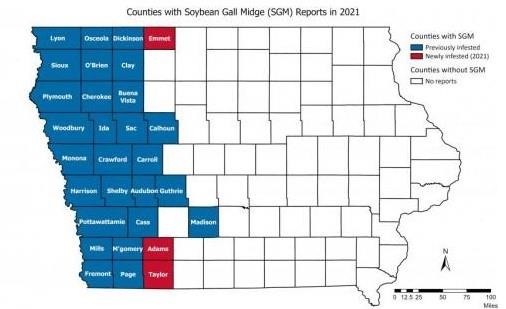
Map

Like in previous growing seasons, infested plants are first detected along field edges. Look for wilted plants and take a closer look at the base of the stem. Spilt the stem to look for larvae feeding inside.

Source : iastate.edu

Trending Video

Do Cold Temps Impact Emerging Corn & Soybeans? | Pioneer Agronomy

Video: Do Cold Temps Impact Emerging Corn & Soybeans? | Pioneer Agronomy

A cold snap swept across west central Minnesota and eastern South Dakota, bringing frost, fog, and temperatures dipping into the 20s—raising urgent questions about early crop damage.

Pioneer Agronomist Eric Rice breaks down what those overnight temperatures could mean for emerged corn and soybeans, how to assess frost injury, and why patience is key before making any replant decisions. Learn the critical differences between corn and soybean growing points, what cosmetic vs. serious damage looks like, and how last week’s high winds may also be influencing what you’re seeing in the field.

Watch for:

• Frost thresholds for early-season crop damage

• Why corn may be more resilient than it looks

• Soybean growth stages and frost susceptibility

• How to evaluate brittle stems and discolored tissue

• Why waiting 4–5 days before assessing stand loss matters

• When to contact your local Pioneer agronomist or sales representative