By James Rogers
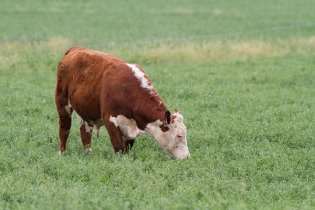
"In our region of the Southern Great Plains, we basically grow forage during the spring and fall, corresponding to our seasonal rainfall pattern. We are typically short on forage during the winter and summer months. We have learned to overcome some of the wintertime forage shortfall by shifting some of our late summer/early fall forage growth to winter by creating stockpile forage. The same process can be used to help overcome the summer forage slump, but it takes a little planning and management.
"It would be nice to be a perfect grazing manager. Having the ability to maintain a canopy of forage cover 6 to 10 inches high, year-round. Never having to supplement the cow herd with anything but forage all year, having your cattle maintain perfect body condition and creating envious neighbors. It's not impossible, but it sure is a hard thing to do. Forage production ebbs and flows seasonally. At some points in the year, you wonder if you will ever have grass again. Other times, you wonder what you are going to do with all that forage. Hopefully by the end of the year, forage production will equal forage demand and everything will come out even.
"For many producers, there is a worry about what to do with all of the forage produced in the spring flush. However, if you have forage production and demand balanced, it will make managing forage year-round much easier. So, begin there with developing an appropriate long-term carrying capacity for your operation. If you have questions on how to do this, contact the Noble Foundation; we would be happy to assist you. If forage production and demand is balanced, think about your entire operation as one forage system that flows from one season to another.
"As you flow from winter into spring, rainfall will increase, temperatures will warm, and you will experience an abundance of fresh, high quality forage. The majority of warm-season perennial forage growth will occur by July 1. If you are in a grazing rotation, it may be hard to rotate fast enough to top all of your paddocks before they start getting ahead of you. Is this a mistake? Is this something to worry about? No, graze them after July 1 as summer stockpile. If you have a spring calving herd, the breeding season is at the very end and bulls are coming out at this point in the year. Cow nutritional demand is decreasing, and the increase in forage maturity at this point in the year should not be a problem. Forage growth and grazing rotations will be slowing down. If your summer stockpile is an introduced forage such as bermudagrass, you may wish to stay in these paddocks longer to remove the excess growth from summer; then, follow up with nitrogen (N) fertilizer to stimulate fall growth for winter stockpile grazing. If your summer stockpile is nativegrass, you will want to allow the nativegrass time to rest prior to frost in order to replenish carbohydrate reserves for spring growth.
Click here to see more...