On a tiny island in Scotland's far-flung Orkneys, thousands of sheep spend the winter munching on seaweed, a unique diet that scientists say offers hope for reducing planet-warming methane emissions.
Around 60 people share North Ronaldsay—an island just over 3 miles (5 kilometres) long, ringed by rocky beaches and turquoise waters off the north coast of mainland Britain—with the distinctive native sheep.
Boasting brown, beige or black wool, the animals are hemmed into its foreshore owing to a large system of stone walls—called a sheep dyke—built in the early 19th century to keep them away from fields and roads.
The island's crofters—people who live and work on so-called croft agricultural land—wanted to use every available space to grow crops and as pasture for cows.
The unintended result: in summer the sheep can nibble on grass, but by winter eating the plentiful seaweed is their only means of survival.
While some other mammals—including Shetland ponies native to the neighbouring island chain, and red deer—are known to snack on seaweed, scientists say that the North Ronaldsay sheep are unique worldwide for spending months eating only the marine plants.
Methane reduction
With the world facing a deepening climate emergency, they are increasingly seen by some as a case study that could lead to a breakthrough in methods for raising livestock, which is a major source of greenhouse gases.
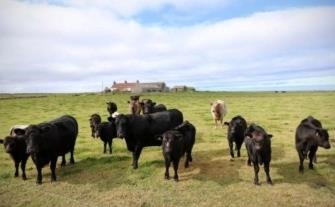
Farm animals belch and fart methane gas which, though trivial sounding, is about 30 times more powerful than carbon dioxide at trapping heat in the atmosphere.
Given the vast scale of the global meat industry, the issue has become a major focus for climate scientists—just as world leaders prepare to gather in the Scottish city Glasgow from Sunday for the crucial COP26 summit.
The seaweed diet of the Orkney sheep has an effect on their complex digestive system and appears to reduce the amount of methane produced.
"There's different components in the seaweed that actually interfere with the process (of) how methane is made," said Gordon McDougall, a researcher at The James Hutton Institute in Dundee in eastern Scotland who has been examining the sheep's diet for two decades.
Researchers at The University of California, Davis, published results in March showing that a "bit of seaweed in cattle feed could reduce methane emissions from beef cattle as much as 82 percent".
David Beattie, another James Hutton Institute scientist, stressed there is huge interest in such innovation.
"There's a really big movement within the industry to try and cut out the carbon footprint that the industry as a whole has," he told AFP.
"I see seaweed playing a part in that."
Scale
This would not necessarily mean cows and sheep switching to a diet entirely comprised of seaweed like the North Ronaldsay sheep, but it could supplement their usual feed.
Seaweed is not available in large enough quantities to feed so many animals, McDougall noted, and taking away too much from the sea could also damage the environment and ecosystems.
But the marine plants—good sources of minerals, vitamins and omega-3 fatty acids—could partly replace soy, which is heavily used in animal feed but transported for thousands of miles and linked to deforestation.
Researchers still need to determine the types and quantities of seaweed which could be best suited to adding to feed.