The cost of nitrogen fertilizer can be one of the biggest expenses to forage production, leading many producers to wonder if there is a cheaper way of producing the forage they need for their grazing animals.
“Some producers in central Oklahoma are looking at legumes as a way of bridging the gap in the production of their grass pastures since legumes have reduced nitrogen fertilizer inputs,” said Wes Lee, McClain County Extension director and agricultural educator.
Legumes have the ability to produce their own nitrogen with the help of bacteria that live on their roots.
“The bacteria have the ability to convert nitrogen from the air into a useable form for the plant,” Lee said. “Most of this nitrogen is taken in by the plant itself for its own growth, while providing quality forage for grazing animals.”
Nitrogen credits attributed to legumes can be as high as 200 pounds of nitrogen per acre for white clover, 110 pounds per acre for red clover and 100 pounds per acre for crimson and arrowleaf clovers.
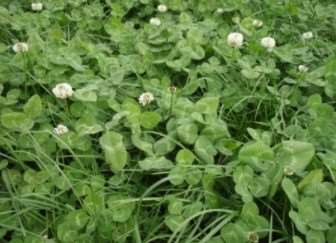
“Contrary to popular opinion, very little of the nitrogen leaks out from the roots and is available for grass growth,” Lee said. “We do receive some nitrogen recycling from legumes in animal urine and manure, but about 50 percent of the nitrogen is lost through volatilization and is not available for forage grass uptake.”
However, in a pasture that has been in legume production for several years, it is not unusual to have decaying roots and bacteria nodules providing nitrogen to the soil that is available for the grass crop to use.
“The amount returned to the soil by this decomposition varies greatly with the previous year’s production of legumes,” Lee said. “The nitrogen credit to that soil can vary from 20 to 50 pounds of nitrogen per acre from decaying plant root material and recycled animal waste.”
So are legumes a good way of reducing the need for fertilizer inputs for producers in central Oklahoma? Yes, typically, just not because it puts large amounts of nitrogen in the soil for grass to use.
“What it does is replace the grass production a producer used to get with nitrogen fertilization with quality legume production, which is probably better for grazing animals in the long run,” Lee said.
Will it reduce cost of production? The answer is the obligatory “well, it depends.” In order to grow legumes, a pasture’s soil must have the proper acidity value and phosphorus and potassium levels in order to survive and thrive.
“If a pasture’s fertility is not in good enough shape to produce legumes and the producer is not willing to spend the time, money and effort to get them established properly, then don’t waste time buying expensive legume seed,” Lee said. “Without the proper soil fertility environment, a legume stand will not survive.”
In addition, producers need to remember legumes are broadleaf plants and therefore will limit weed control options on the pasture.
Basically, using legumes in a balanced forage system can in the long run save a producer on nitrogen inputs and provide grazing animals with quality forage. However, it will take proper management in order for legumes to work well over the long haul.
“Start by getting a soil test before jumping headfirst into a legume forage system,” Lee said. “Then pick a legume that is adapted to local growing conditions. If a producer is willing to commit to the increased management levels, legumes may be a viable way to reduce a livestock operation’s dependence on fossil-fuel-based nitrogen fertilizer.”
Anyone interested in obtaining additional information about how legumes can work in his or her local growing conditions should contact the nearest Oklahoma State University Cooperative Extension county office, typically listed under “County Government” in local directories.
The Oklahoma Cooperative Extension Service is a state agency administered by OSU’s Division of Agricultural Sciences and Natural Resources, and is a key part of the university’s state and federally mandated teaching, research and Extension land-grant mission.
Source: okstate.edu