By Wesley Everman and Meaghan Anderson
With the recent dry conditions and highly variable forecasted chances for rainfall for parts of Iowa just as postemergence herbicide applications begin, questions often come up regarding use of residual herbicides and efficacy of postemergence applications during these conditions.
The forecast
The current weather forecast shows highly variable chances of rainfall across the state in the next week, and the National Oceanic and Atmospheric Administration Climate Prediction Center (NOAA CPC) is predicting warmer than normal and near normal rainfall for the next 6-14 days for most of Iowa*. See more of their forecasts on the NOAA CPC website.
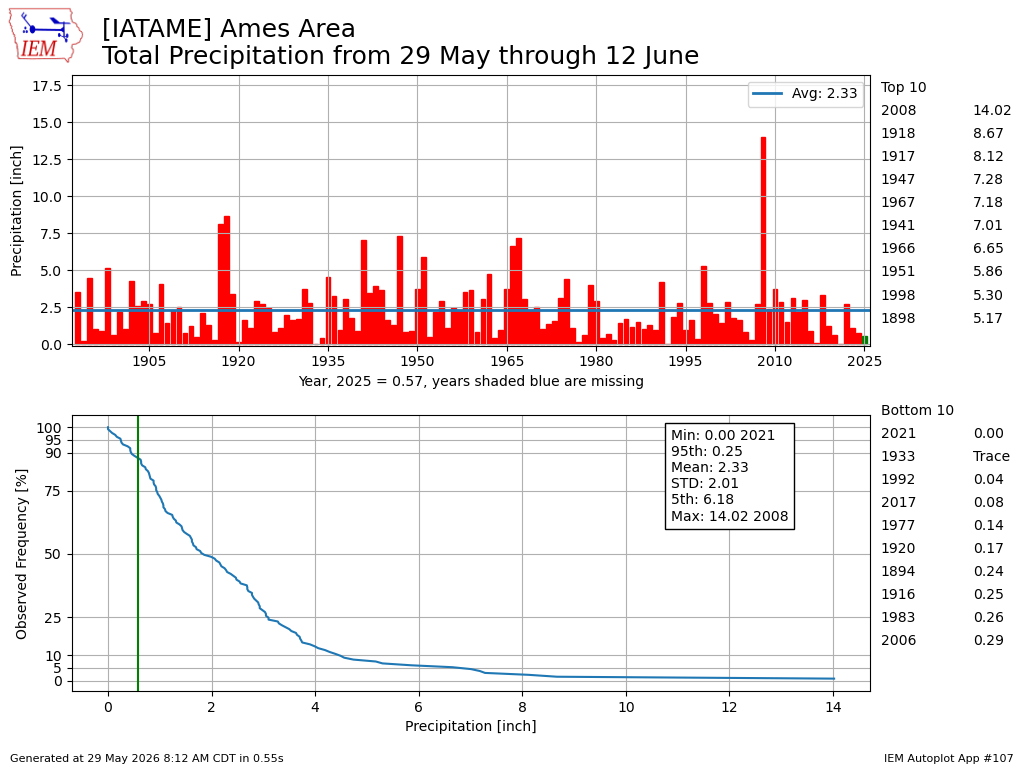
The average rainfall over the next two-week period for Ames, IA has been approximately two inches over the last 132 years. Rainfall has exceeded one inch during the May 29-June 11 period in about 75% of years and exceeded 0.5 inch in about 90% of years. While rainfall may not arrive immediately following a herbicide application, it will eventually come to activate herbicides.
Things to consider when making postemergence applications
- Scout fields prior to postemergence applications to prioritize fields for sprays and check that weeds appear healthy and not wilting.
- If warm, dry weather persists, emerged weeds may become more challenging to control, especially on hot, low humidity afternoons.
Source : iastate.edu