By Mark Bolda
While we are all familiar with the fruit twisting and "monkey facing" caused by lygus bugs in strawberry fruit, we may have been kept unaware of other possible effects of these pests because of low treatment efficacy. Since I am working with an insecticide (as yet, unregistered) with very high and long lasting suppression of lygus bugs, I am now able to compare, side by side, what is going in berries with lots of lygus and berries with very few to no lygus.
Outside of the giant reductions in twisted fruit and marvelous maintenance of yield by this insecticide, I am also finding that fruit size, outside of those which are already twisted, is also benefiting from a low lygus presence. Dividing plot fruit weight by the number harvested revealed that this is indeed the case. If you think about it, it makes sense since lygus nymphal feeding on the flower results in lessened achene ("seed") formation, and we know for a fact that smaller fruit have less achenes - you can easily check this for yourself.
Apparently, not all of the failed achenes caused by lygus feeding result in fruit twisting, it's looking like some of the failures just end up making the fruit smaller in size. See graphic number 2 below.
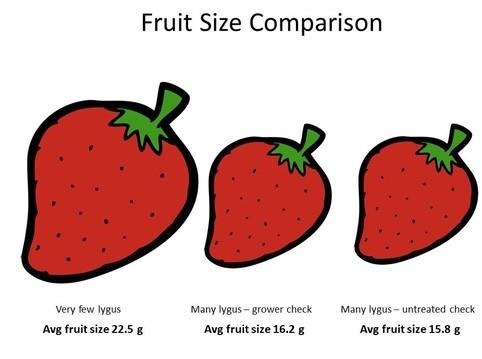
Comparison of average fruit size from July 18 harvest. Difference is statistically significant.
Source : ucanr.edu