By Bob Yirka
A team of researchers from several institutions in Niger, Germany and the U.K. has conducted a real-world test of the use of human urine as a natural form of fertilizer for crops. In their paper published in the journal Agronomy for Sustainable Development, the group describes an experiment they conducted with women farmers in the Niger Republic and the use of human urine.
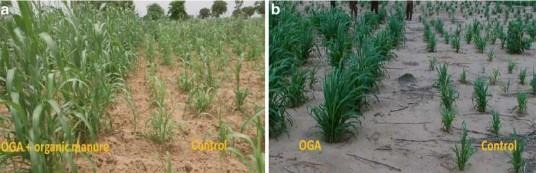
Humans have known for thousands of years that their urine is an excellent fertilizer for crops. It contains phosphorus, nitrogen and potassium—many of the same ingredients as commercial fertilizers. But because of the squeamishness associated with using urine to grow crops, its use has been limited. Still, many gardeners know of its benefits, and thus it is used around the world to help people grow healthy food for their families. In this new effort, the researchers wondered if human urine could be used on a larger scale, such as farms growing crops for sale. They enlisted the assistance of a group of women living in an isolated part of the Republic of Niger. The farmers there have been struggling for many years to fertilizer their pearl millet grain crops, hampered by the cost of commercial products and the scarcity of animal manure.
The first step in the experiment involved renaming urine because its common name was considered offensive. They settled on Oga. Next, they separated the farmers into two groups; one ran their farms in the traditional way, the other fertilized their wheat using Oga. Over two growing seasons, crop yields were measured for both groups. The Oga for the second group of 27 farmers was provided by the farmers themselves, who were taught how to pasteurize, store and dilute their urine for use as fertilizer. They also added small amounts of animal manure.
Click here to see more...