By Adam Varenhorst
Drought conditions have continued and worsened in much of South Dakota during this season (Figure 1). As a result, two-spotted spider mite populations have been present in most fields and have recently had large population growth in soybean fields throughout the state. This large population growth can be attributed to the hot temperatures from last week and the continued dry conditions. In areas that received small amounts of rain, spider mite populations may not be as much of an issue. This is because humid conditions within the canopy encourage the growth of pathogenic fungi that can wipe out the spider mite population. However, these pathogens aren’t active when there isn’t humidity, and the spider mites will continue to thrive.
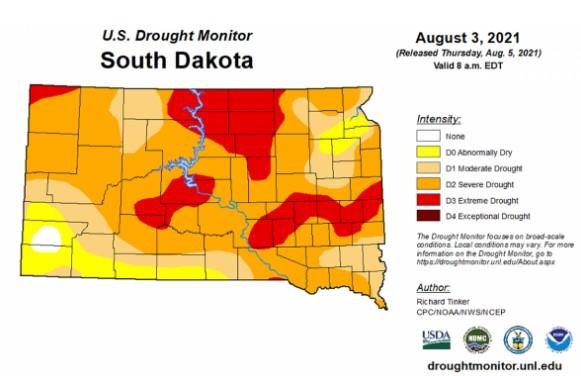
Figure 1. U.S. Drought Monitor for South Dakota. Released Thursday, Aug. 5, 2021. Courtesy: U.S. Drought Monitor
If you are observing patches of soybean that are turning a lighter color or yellowing, they should be examined for spider mites. One of the issues with a spider mite infestation during a drought is that the symptoms for both are often very similar when driving past the field. However, when scouting in the field, spider mite infestations can be easily identified by the presence of stippling (small, white holes on the leaves), webbing on the underside of the leaves and the presence of the spider mites. However, spider mites are very small and may require a hand lens to observe.
Source : sdstate.edu