By Erika Lundy-Woolfolk and Sherry Hoyer
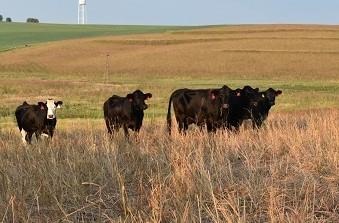
Several counties in Iowa have been released for emergency haying and grazing of Conservation Reserve Program (CRP) acres. While utilizing this additional forage resource provides producers with opportunities, there are challenges and considerations to think through when deciding how to best utilize the forage.
Forage quality
At best, forage quality of CRP acres harvested this late in the year is comparable to corn stalks. Quality is determined by the last time the acres were hayed or grazed, CRP program and forage species present, according to Iowa State University Extension and Outreach. Additionally, plants have been drought stressed this summer, and therefore, are more mature than normal. Previous samples of CRP forage have tested crude protein values as low as 2% to as high as 8%, with energy values frequently below 50% TDN.
More importantly, be aware of unwanted litter and debris (cans, shotgun shells, old fencing, garbage, etc.) that may be present, especially if baling CRP acres. To decrease the risk, avoid harvesting acres immediately alongside the ditch or fence line.
Consider supplementation
Due to the low forage quality, it is important to get a nutrient analysis on the forage resource to know what you are working with. Regardless of stage of production or class of cattle, additional energy and protein supplementation will be necessary to meet gestating cow or fed cattle nutritional requirements. Consider weaning calves to reduce cow requirements and subsequently, supplementation requirements.
Weed presence
Pay attention to weed presence and make sure you know if there any toxicities associated with that weed. CRP acres tend to contain a large amount of weeds or other forages and seed heads, that are not always desired in pastures, hay fields or even crop fields. Carefully consider your feeding areas when utilizing CRP hay to reduce the area where new weeds are introduced through seed dispersal in the hay or manure deposition or spreading. With drought stressed forages, bare ground will increase the likelihood of weeds next spring.
Water sources
If grazing CRP acres, carefully evaluate water sources. Water availability on CRP acres is often limited. Use caution when hauling water to cows. Avoid utilizing liquid fertilizer tanks to haul water, as it cannot be cleaned out well enough to prevent nitrate poisoning. Likewise, many ponds have experienced prolonged periods of hot temperatures and minimal influx of new water, which is the perfect environment for algae blooms. Watch for blue-green algae, or cyanobacteria, which is a major health risk for cattle.
Before grazing or harvesting, contact your local FSA office to ensure eligibility and approval. If you have questions regarding forage sampling or utilizing CRP forages in beef cattle diets, contact your ISU Extension and Outreach beef specialist. For additional resources dealing with drought, visit the resources provided by the Iowa Beef Center.
The Iowa Beef Center at Iowa State University was established in 1996 with the goal of supporting the growth and vitality of the state’s beef cattle industry. It comprises faculty and staff from Iowa State University Extension and Outreach, College of Agriculture and Life Sciences, and College of Veterinary Medicine, and works to develop and deliver the latest research-based information regarding the beef cattle industry.
Source : iastate.edu