Farms.com Home   News

Western Bean Cutworm Update

Western Bean Cutworm Update

By Amy Raudenbush and Suranga Basnagala et.al

Statewide western bean cutworm (WBC) numbers declined for the week-ending August 1 resulting in an overall average of 10.2 moths per trap. Ten counties remained above scouting threshold and include Ashtabula, Defiance, Fulton, Geauga, Huron, Lake, Lorain, Paulding and Trumbull. For more information on WBC monitoring and scouting please visit the agronomic pest website: https://aginsects.osu.edu/
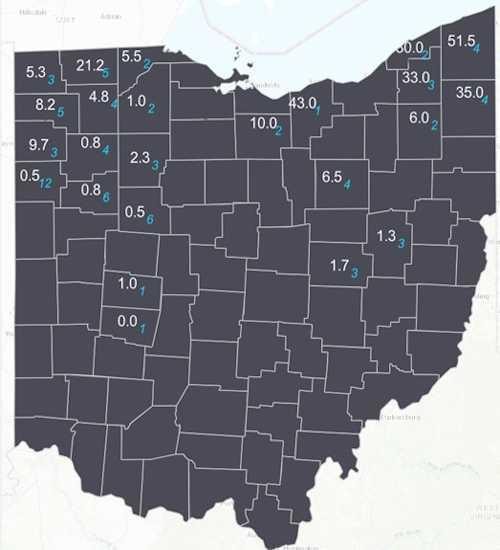
Average Western bean cutworm adult per trap

Figure 1. Average Western bean cutworm adult per trap (in white) followed by total number of traps monitored in each county (in blue) for week ending August 1, 2021. Map developed by Suranga Basnagala, Ohio State University, using ArcGIS Pro.

Source : osu.edu

Trending Video

Residue Management

Video: Residue Management

Residue Management conservation practice manages the amount, orientation, and distribution of crop and other plant residue on the soil surface year-round while limiting soil-disturbing activities used to grow and harvest crops in systems where the field surface is tilled prior to planting. This video explores how Ryan McKenzie implemented this conservation practice on his farm in Samson, Alabama.

Practice benefits:

• Increases organic matter

• Improves air quality

• Decreases energy costs

• Reduces erosion

• Improves soil health

The Conservation at Work video series was created to increase producer awareness of common conservation practices and was filmed at various locations throughout the country. Because conservation plans are specific to the unique resource needs on each farm and also soil type, weather conditions, etc., these videos were designed to serve as a general guide to the benefits of soil and water conservation and landowners should contact their local USDA office for individual consultation.