The CAHRC is expecting that farmers will suffer from a lack of qualified farm managers
By Jennifer Jackson
Good farm management is hard to find – or at least it will be, according to recent study findings. The Canadian Agricultural Human Resource Council (CAHRC) released Dairy: Labour Market Forecast to 2025 and Poultry and Egg: Labour Market Forecast to 2025, after a three-year study of the industries’ workforce.
The CAHRC found that the largest personnel challenge Canadian farmers may face in these two sectors will be the shortage of experienced and skilled farm managers, according to a Jan. 24 release.
This management crisis is of particular significance to dairy, poultry and egg farmers, as manager and ownership jobs represent some two-thirds of these industries’ workforce. In fact, the CAHRC predicts that by 2025 management positions will account for most unfilled jobs, due to a lack of domestic workers.
Over the past seven years, the Canadian dairy industry’s worker demand has decreased due to modern efficiencies, such as automation. In this period, the number of workers shrank by one-third. However, despite a smaller workforce, there were still 3,400 jobs unfilled in 2014 – representing $71 million in lost sales.
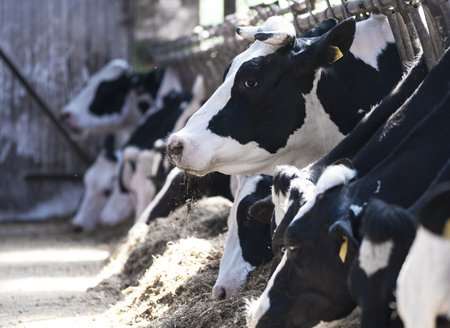
The CAHRC projects both the demand and supply of dairy employees will continue to shrink. They expect 90 per cent of vacant dairy jobs by 2025 will be management positions.
The poultry and egg industry will see experience similar trends, according to the CAHRC. This industry also maintains a stable demand for labourers due to increased technologies and productivity.
And, like dairy, this industry is also experiencing a lack of domestic workers; job vacancies in 2014 represented some $6 million in lost sales.
For both industries, a retiring workforce is a large factor in the challenge. Approximately one-quarter of the poultry and egg workforce, and one-third of the dairy workforce, is expected to retire by 2025.
“Unless these industries can find additional sources of labour with the right skills and experience, they will suffer from a critical gap at the managerial and leadership levels that could inhibit their ability to thrive,” according to the release.
Farms.com has reached out to the Dairy Farmers of Ontario for comment on the study findings.